
Whole-house repiping, engineered and labeled.
Original galvanized and worn-out polybutylene do not get better, they just fail on a schedule you cannot see. We replace failing supply systems with clean PEX or copper, run home to a labeled manifold and routed with your drywall in mind. Veteran-owned, permitted, warrantied in writing, and scoped honestly: whole-house when it is warranted, partial when it is not.
How to know it is time.
Supply pipe rarely quits all at once. It sends notices first: water that runs rusty or tea-colored on the first draw of the morning, a shower that fades the moment the washing machine calls for water, and pinhole leaks that keep finding new places to appear no matter how recently the last one was patched. Each symptom on its own is an annoyance. Together, they are a diagnosis.
East Portland’s housing stock makes that diagnosis common. Much of the east side went up in the decades before 1970, when galvanized steel was the standard supply material, and galvanized fails from the inside out: the zinc lining wears away, rust builds inward, and the usable bore of the pipe shrinks a little more every year. Homes plumbed in the late 1980s and early 90s can carry a different liability, polybutylene, the gray plastic pipe that earned a national reputation for splitting without warning.
Honest scoping starts with what it is not. Falling pressure can also come from a failing pressure reducing valve, a far smaller repair, so we rule that out before anyone says the word repipe. Our guide to low water pressure in Portland lays out the full checking order, including how to spot corroded galvanized from the outside. When the pipe itself is the problem, everything below explains how we replace it.
Rust-colored water
Brown or tea-tinted water at the tap, especially first thing in the morning, is corrosion shedding into your supply.
Pressure that keeps falling
Flow that dies when a second fixture opens points to pipe bore narrowed by decades of internal rust.
Repeat pinhole leaks
One pinhole is a repair. A patch history spread across the house is a system announcing the end.
Pre-1970 galvanized
Homes built before about 1970 often still run on original galvanized steel that is well past its working life.
Polybutylene era plumbing
Gray plastic supply pipe from the late 1980s and 90s, known for sudden splits, is worth replacing before it picks the moment.
PEX or copper? Both, installed right.
A repipe is one service with a materials decision inside it, not two competing products. We install PEX and copper both, price them side by side in the same written quote, and tell you plainly where each one earns its cost. For the numbers behind the decision, our Portland repipe cost guide breaks down what actually drives the price.
| What matters | PEX | Copper |
|---|---|---|
| Installed cost | Lower. Flexible runs pull through the structure quickly, with fewer fittings and fewer wall openings. | Higher. Rigid pipe means more labor, more soldered joints, and more access openings. |
| Freeze tolerance | Strong. The tubing flexes as ice expands, which is real insurance in an east-county cold snap. | Rigid pipe can split when a hard freeze reaches a run in an exterior wall. |
| Longevity | Immune to the corrosion that kills metal pipe, and built for decades of quiet service. | Generations of proven service life when the water chemistry stays friendly. |
| Noise | Quiet. Flexible runs absorb water hammer and expansion ticking. | Can tick and knock against framing as hot lines expand and cool. |
| Where it wins | Most whole-house repipes: cost, speed, freeze resilience, and clean manifold home runs. | Exposed runs, mechanical rooms, and homeowners who want the classic standard. |
We bring samples of both to your consultation, walk the routing together, and your guaranteed written quote prices the material you choose, exactly.
A repipe you can read.
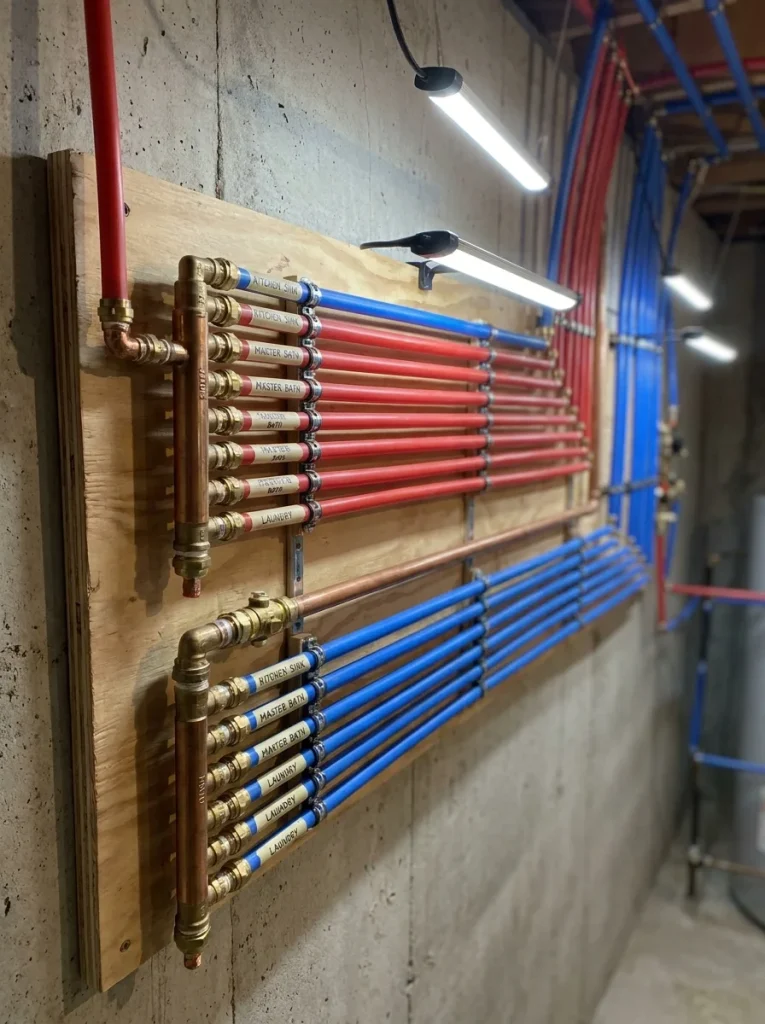
Open the access panel on one of our repipes and the system explains itself. Every fixture gets its own labeled home run back to an organized manifold, so the wall reads like a well-marked electrical panel: kitchen sink, primary shower, hose bib, laundry. No mystery tees buried in the framing, and no guessing which line feeds what.
That legibility is not cosmetic. It means a future repair shuts off one fixture instead of the whole house. It means the plumber who opens that wall in fifteen years knows exactly what they are looking at. And it means that when you sell, the inspection finds an engineered system instead of a patchwork.
It is the difference between pipe that was installed and pipe that was engineered, and it is the standard on every repipe we run, PEX or copper, whole-house or partial.
- A labeled home run for every fixture
- Organized manifold with fixture-level shutoffs
- New quarter-turn stops at the fixtures
- Documentation the next plumber will thank you for
Drywall-conscious routing, concierge-level protection.
The question underneath every repipe consultation is really about mess, so here is the straight answer: we plan the routing before we make the first cut. New lines travel through closets, chases, attic runs, and cabinet backs wherever the structure allows, and the openings we do need are cut square, kept to standard patch sizes, and logged so your drywall contractor can quote the repairs from a list instead of a walkthrough.
Protection goes down before tools come out: floor runners from the front door to every work area, containment where we cut, landscaping shielded outside, and a disinfected worksite before we leave. The jobsite photo in this section is one of ours, not a stock scene. That is the same standard your home gets.
You will not spend a night without water. We build the new system alongside the old one, keep the house running on the existing lines while we work, and make the final changeover in one planned window. Repipes are permitted work in Portland, so we file the permit, meet the inspector, and hand you the signed-off paperwork.
One more decision worth making while the walls are open: if your water heater is near the end of its life, a repipe is the best-value moment you will ever have to replace it. Ask us to price the swap alongside the repipe on our water heater service, and decide with real numbers in hand.

Walkthrough & scope
A free consultation, by phone or a 5-minute video call, where we scope whole-house versus partial honestly.
Exact written quote
A guaranteed price in writing before the first cut, with your material choice priced exactly.
The protected repipe
Runners and containment down, new lines in, and water restored every evening through staged shutoffs.
Inspection & follow-up
City inspection passed, openings documented for patching, and a follow-up call to confirm you are happy.
Whole-house or partial? We scope it straight.
Not every home needs the full treatment, and we have no interest in selling one that does not. A partial repipe is a legitimate project with a legitimate price: one failing branch, a bathroom wing a remodel already has open, a stretch of polybutylene isolated to an addition. When the failure is contained, the scope should be too. And if a repair genuinely solves it, that is the recommendation you will get.
Whole-house makes sense when
The system is failing everywhere at once: original galvanized throughout, pinholes across multiple floors, discolored water at every tap, and pressure loss the whole family notices. Replacing it in one project costs less and disrupts less than chasing it branch by branch.
Partial makes sense when
The failure is contained: one bad branch, one wing of the house, or walls a remodel already has open. We replace what is failing, tie in cleanly to what is healthy, and label the new work so the system stays readable.
A main water line is not a repipe
The service line from the meter to your foundation is its own stand-alone project with its own trenchless installation method, and a failed service line is not a reason to repipe a healthy house. We diagnose and scope the two independently. If the street-side pipe is your problem, see main water line replacement.
What homeowners say after the job.
“I took bids from about four plumbing contractors for a new line into the house and a re-pipe of all three floors. Jeremy, of Panda Plumbing, not only met every high criteria I was hoping to find when hiring a contractor, any contractor, he raised the bar.”
Don E.
Whole-house repipe · Verified BuildZoom review
“Our home was built in 1913 and it was time to have the pipes replaced. Jeremy was very professional and provided honest input. Him and Nick prepped the space well and cleaned up after themselves on a daily basis.”
Jung Halverson
1913 house repipe · Google review
Top 2%
of Oregon’s 62,000+ licensed contractors
A 5.0 rating across 31 Google reviews, and a BuildZoom score of 115 earned through verified permits and an active license.
Read our reviewsThe repipe questions every homeowner asks.
How long does a whole-house repipe take?
Should I choose PEX or copper?
Will a repipe destroy my walls?
Do I need a repipe or just a repair?
Is a new main water line part of a repipe?
More questions? Browse every answer on our FAQ page.
Related services

Main Water Line Replacement
A stand-alone service from meter to foundation, installed trenchless so the yard survives.
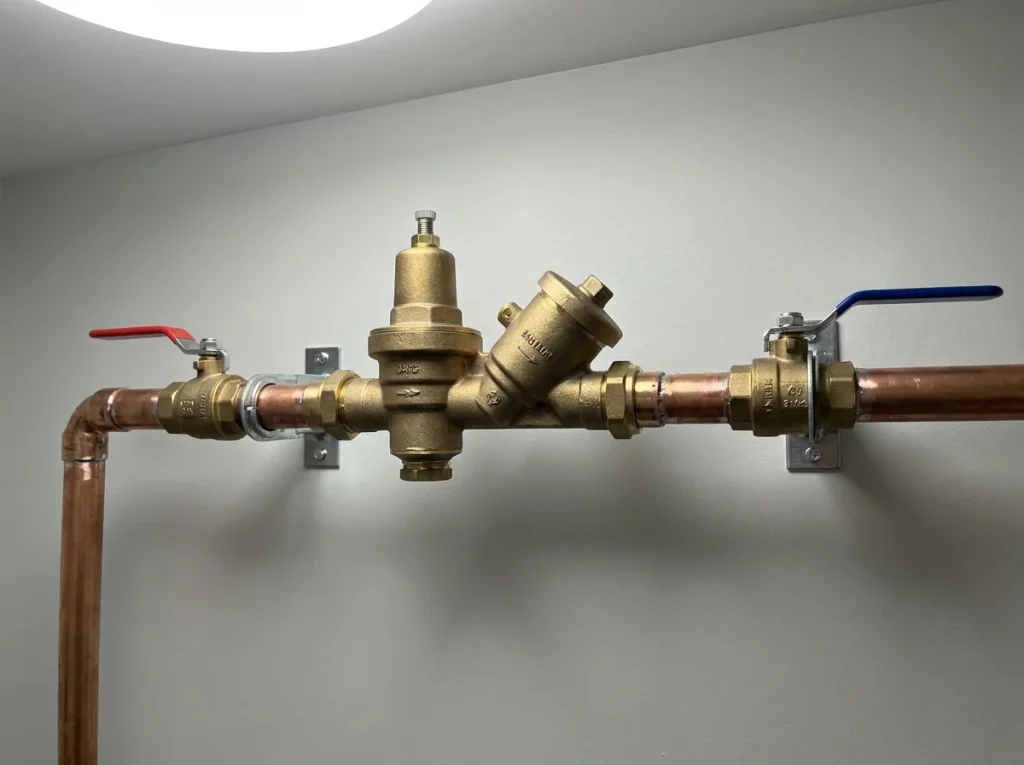
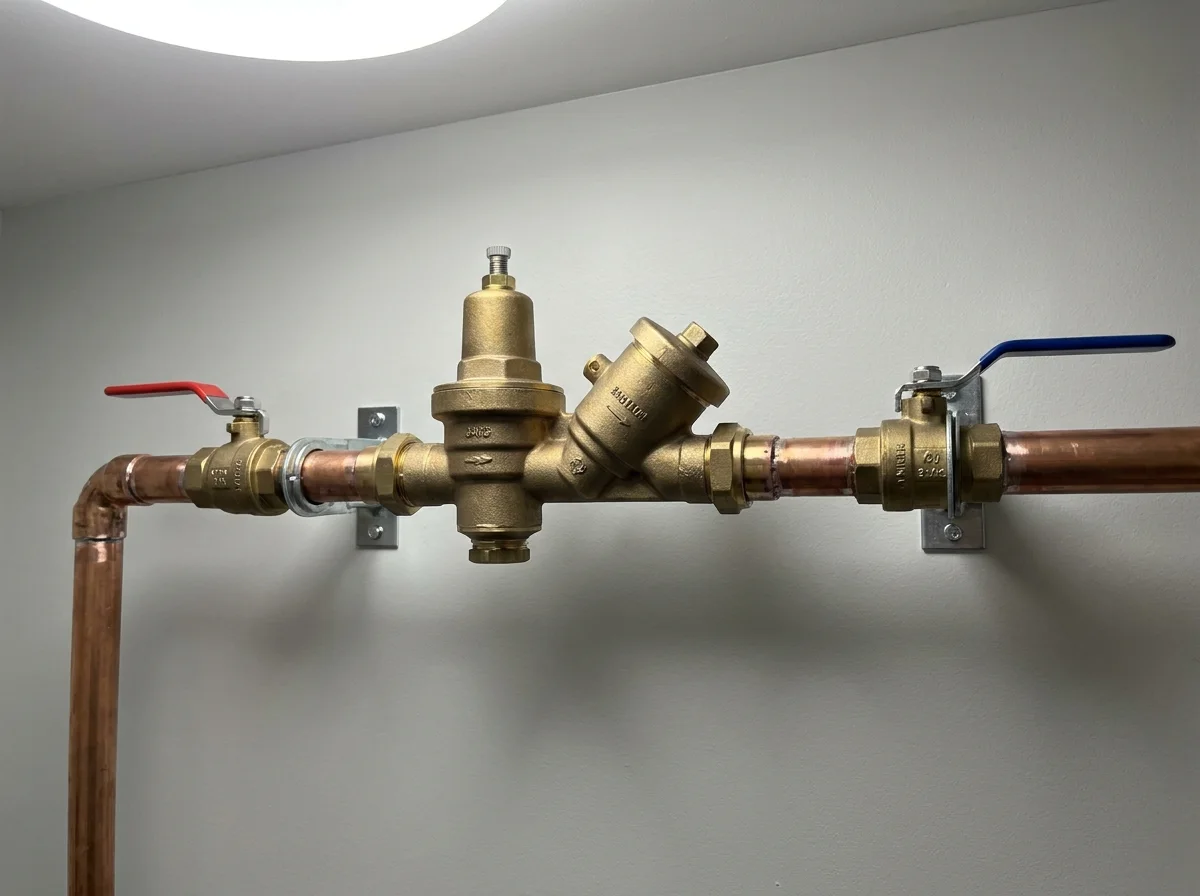
Pressure Reducing Valves
High street pressure wears out fixtures and fresh pipe alike. We set it right at the source.
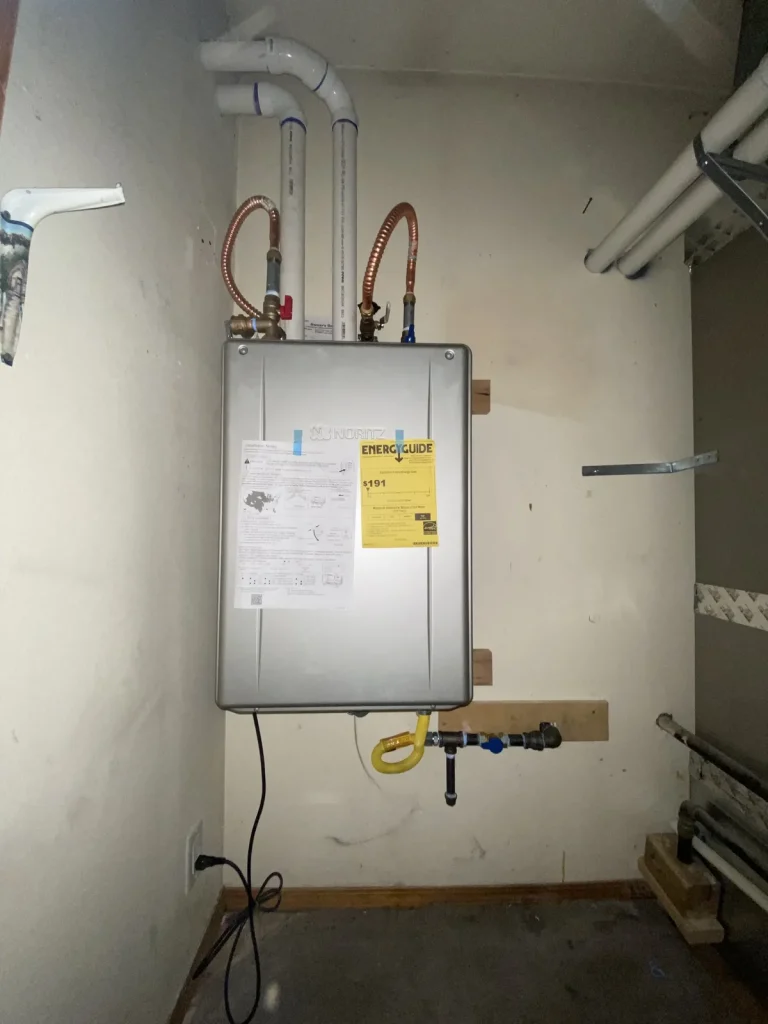
Water Heaters
Repair, replacement, and honest advice, with installs timed neatly to an open-wall repipe.

Smart Leak Shutoff
Moen Flo and Phyn systems that watch your new plumbing and stop water before damage spreads.