
Low water pressure: what your house is trying to tell you.
Low water pressure is the most second-guessed complaint in plumbing. The same symptom, a shower that used to push back and now just falls on you, can come from a five-minute fixture cleaning or from a failed pipe under the front yard. Because those fixes sit at opposite ends of the invoice, the order you check things in matters. Guess at the expensive end first and you pay for work your house never needed.
What follows is the checking order we actually use on pressure calls across Portland’s east side, cheapest and most local first, buried and structural last. Several of the early checks cost nothing, and you can run them yourself before you ever pick up the phone.
1. First question: one fixture, or every fixture?
What it feels like: either a single faucet has gone weak while the rest of the house behaves, or every tap has lost its push at once.
How to check: walk the house and run water in at least three rooms, upstairs and down, hot and cold separately. Two minutes of this sorts nearly every pressure problem into one of two families. A single weak fixture is a local issue, almost always minor. A house-wide drop points at the supply side: the regulator, the piping, or the buried main water line that feeds everything.
Note two more details while you walk. Did the change land overnight or creep in over months? Sudden drops lean toward a failed regulator or a leak; slow fades lean toward corrosion. And is the weakness only on the hot side? Remember that answer for later in this list.
2. One weak fixture: clean the aerator, then suspect the cartridge
What it feels like: the bathroom faucet sputters or sprays sideways, the kitchen sink takes forever to fill a pot, yet the shower down the hall is perfectly fine.
How to confirm it: unscrew the aerator, the small threaded screen at the tip of the spout. If you find grit, flakes, or white scale trapped in it, you have found your problem. Rinse it and thread it back on. Shower heads answer to the same logic: an hour soaking in a bowl of vinegar dissolves the mineral buildup that has been quietly pinching the spray.
The honest part: this is not plumber work, and you should not pay a service call for it. If the aerator is clean and the fixture is still weak, the cartridge inside the valve body is the next suspect, and that one is a judgment call. Confident DIYers swap cartridges every weekend; if the valve is unfamiliar or the shutoffs look ready to snap, hand it off.
One warning sign deserves respect: an aerator that clogs again within a few weeks is catching debris from somewhere upstream. That is not a fixture problem. Keep reading.
3. Whole house and a low reading: the pressure reducing valve
What it feels like: every fixture is weak, hot and cold alike. Sometimes the drop happens in a single day; just as often it drifts down so slowly the family adapts without noticing, until a night in a hotel shower resets everyone’s expectations.
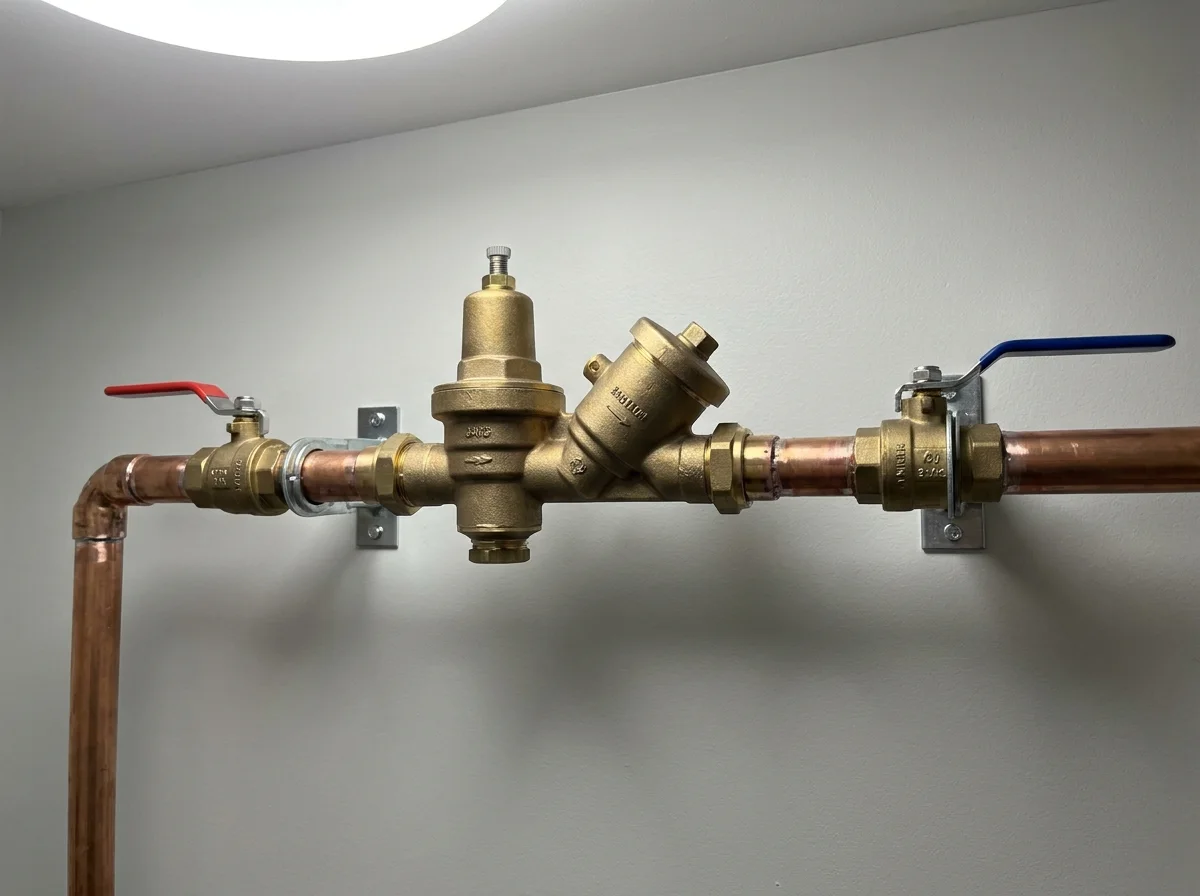
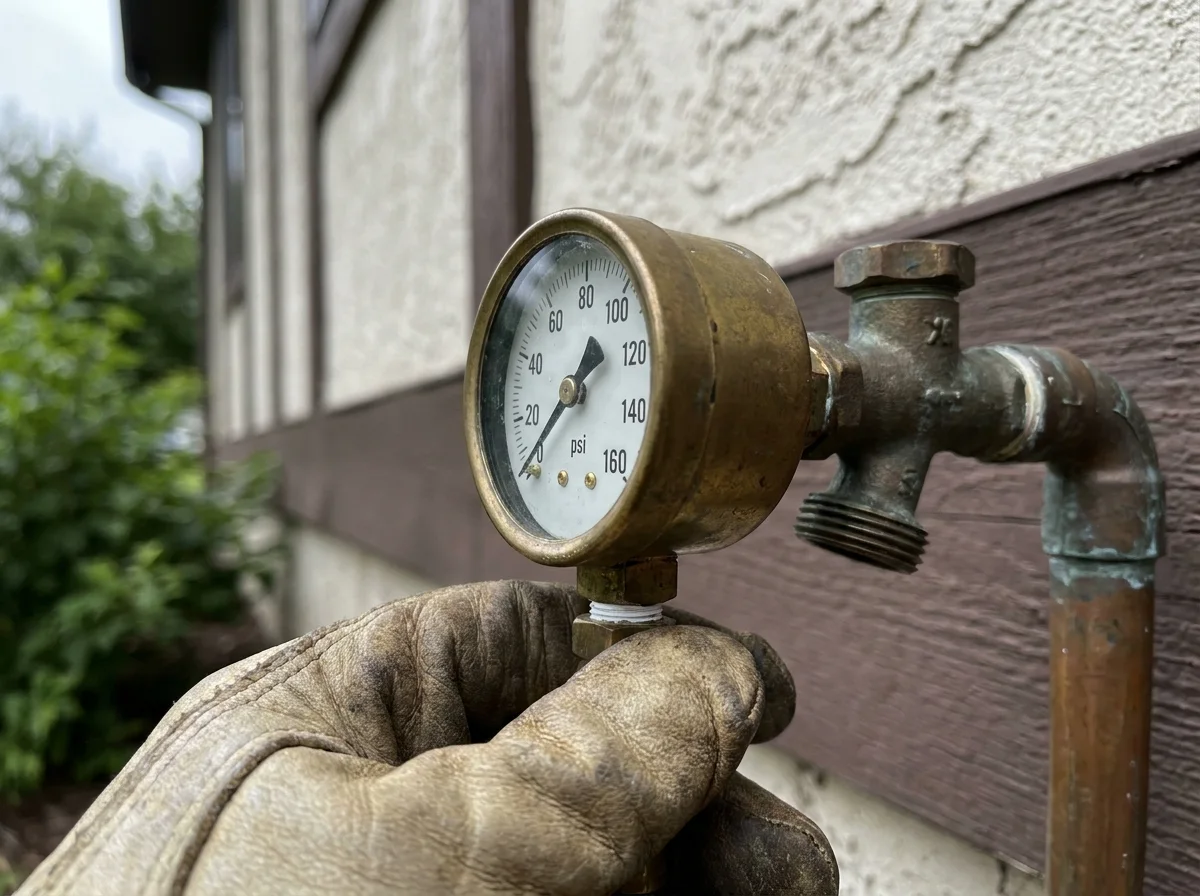
How we confirm it: with a number. A gauge threaded onto an outdoor spigot reads the home’s standing pressure in seconds, and in a healthy house that number usually lands between 40 and 60 psi. If yours shows 30, the mystery is mostly solved: the pressure reducing valve, the bell-shaped brass regulator near where the water service enters the house, is no longer letting enough through. The same device built to knock excessive street pressure down can fail closed-fisted and throttle the whole home instead. Regulators are wear items, and most deliver a decade or so of quiet service before the internals stick, seize, or wander.
The fix: swapping the regulator is typically a same-visit job, and the replacement gets dialed in and proven against a gauge rather than set by feel. Our pressure reducing valve page covers the full symptom list, including the high-pressure failures that are this problem’s mirror image.
One wrinkle before moving on: pressure and flow are different things, and the gauge measures the system standing still. If it reads a healthy 55 psi but everything turns feeble the moment water moves, something is choking the path it travels. That is the next stop.
4. Pressure that faded over years: galvanized pipe closing itself off
What it feels like: nobody in the house can name the month it got worse. The shower holds up fine alone but gives out the moment the dishwasher or a second bathroom joins in. Aerators keep trapping rust flakes, and after the house sits overnight the first seconds out of a tap sometimes carry a faint orange tint.
Why it happens: a huge share of the east metro’s mid-century housing stock was plumbed in galvanized steel, and the zinc layer that protects the steel surrenders after enough decades. From then on, corrosion stacks up inside the pipe the way plaque builds in an artery. A supply line that began life with a three-quarter-inch opening can be passing water through a pencil-width channel by its fiftieth birthday. Nothing leaks and nothing looks wrong; the pipe is simply strangling the house in slow motion.
How to confirm it: you can spot galvanized from the outside. Find exposed supply pipe at the water heater connections, along the basement ceiling, or in the crawlspace: galvanized is dull gray metal joined with bulky threaded fittings, a refrigerator magnet will cling to it, and corroded joints often wear rusty crusts like arthritic knuckles. What the eye cannot see, we measure, comparing standing pressure against real flow at the fixtures to estimate how much of the original bore is left.
The fix: no valve, cleaning, or clever gadget restores a corroded bore. The lasting answer is a repipe, partial or whole-house depending on what the inspection actually finds.
5. Pressure loss with wet evidence: the main water line
What it feels like: a house-wide drop, often sudden, paired with clues outdoors. A stripe of grass between the meter and the house stays deep green while the rest of the yard browns off in late summer. Soil along that same path feels spongy underfoot. The water bill climbs with no change in habits. Occasionally you hear water moving in a completely silent house.
How to confirm it: the meter test, and you can run it yourself. Turn off every fixture and every water-using appliance, ice maker included. Lift the lid on the meter box, usually at the curb or in the parking strip, and find the small leak indicator on the meter face, a tiny spinner or triangle that registers even a trickle. Write down the reading, leave the house at rest for half an hour, then look again. Any movement means water is escaping between the meter and your foundation, and you are paying for all of it.
The fix: replacing the buried service line. Done with directional boring, the new line gets pulled underground between two small access pits, so the lawn, the driveway, and everything you have planted stay exactly where they are. Our main water line replacement page walks through how trenchless installation works and the other signs a service line is failing.
6. Weak hot water only: the water heater is the bottleneck
What it feels like: cold taps run strong everywhere, but every hot tap in the house is lazy. The shower only turns feeble as you tilt the handle toward warm.
Why it happens: this pattern narrows the search to one appliance, because all of your hot water passes through the water heater before it reaches any fixture. Sediment settles into the bottom of a tank year after year, scale collects at the hot outlet, and in older tanks a deteriorating dip tube can shed plastic bits into the hot lines. Tankless units suffer the same fate differently: scale narrows the heat exchanger until flow drops.
How to confirm it: run cold, then hot, at the same fixture and compare. If cold wins decisively at every station in the house, the heater or the piping immediately around it is your restriction. Age is part of the verdict too; a tank deep into its second decade with a sediment problem is usually announcing something bigger.
The fix: a thorough flush can rescue a younger heater, while a choked or elderly one is often smarter to replace than to revive. Our water heaters page lays out the repair-versus-replace call honestly, for tanks and tankless alike.
7. When it is not your house at all
Sometimes the answer sits outside your property line. If a neighbor two doors down reports the same weak shower, if your street sits on notably high ground, or if the drop coincided with utility work nearby, the cause may be on the supply side of the meter. That is worth a call to your water provider before you spend a dollar on plumbing. A plumber cannot fix utility-side pressure, and a good one will say so plainly. In the rare case where a property is simply served with modest pressure, a booster system is a legitimate engineered solution, but it belongs at the very end of this list, never the beginning.
The checking order, one more time
- Sort the complaint: one fixture or the whole house, sudden or gradual, hot side or both.
- One fixture: clean the aerator, then consider the cartridge.
- Whole house: put a gauge on it and check the regulator.
- Gradual fade with rusty clues: look for galvanized pipe.
- Wet yard or a moving meter: test for a main line leak.
- Hot side only: look at the water heater.
- Whole street affected: call the water provider first.
If you have worked down the list and the trail points at the regulator, the piping, or the buried line, that is where we come in. Book a free consultation and show us the situation on a quick video call, and a journeyman plumber will usually tell you which branch of this list you are on before anyone is dispatched. You get a real diagnosis and an exact price in writing, and your house gets its pressure back.
Quick answers on pressure numbers.
What water pressure is normal for a house?
Can I test my own water pressure?
Is 90 psi dangerous?
More questions? Browse every answer on our FAQ page.
The services behind these fixes
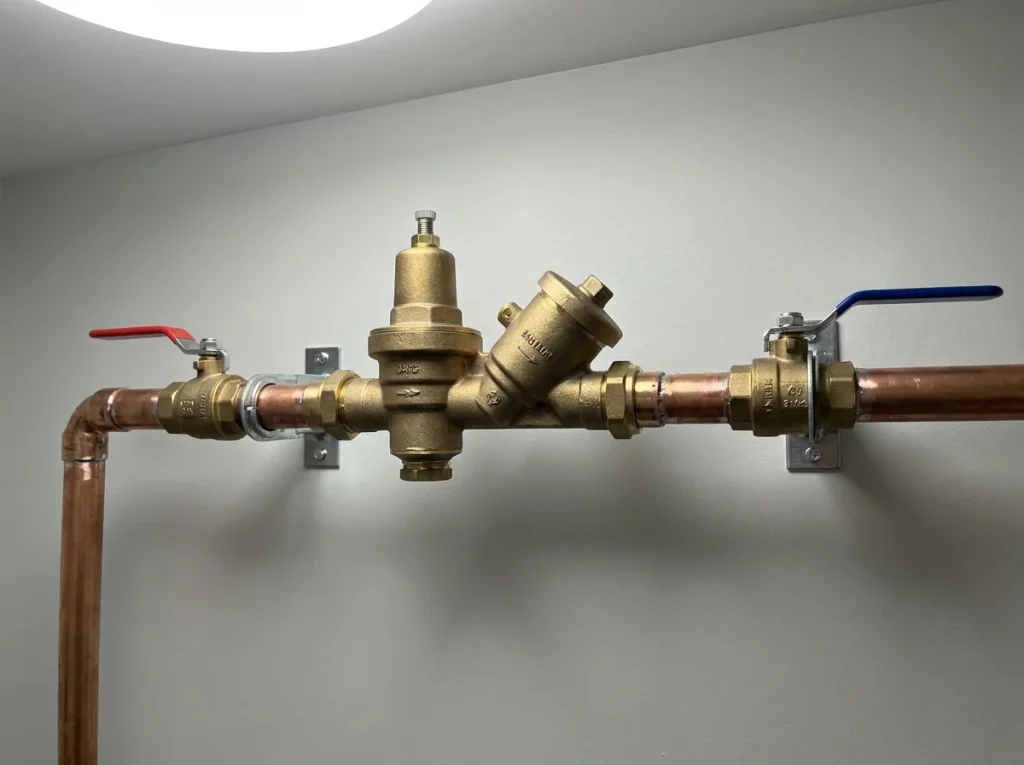
Pressure Reducing Valves
The regulator that sets your whole home’s pressure, gauge-tested and dialed to a safe range.

Main Water Line Replacement
A leaking service line wastes water you pay for. We replace it with directional boring, not a trench.
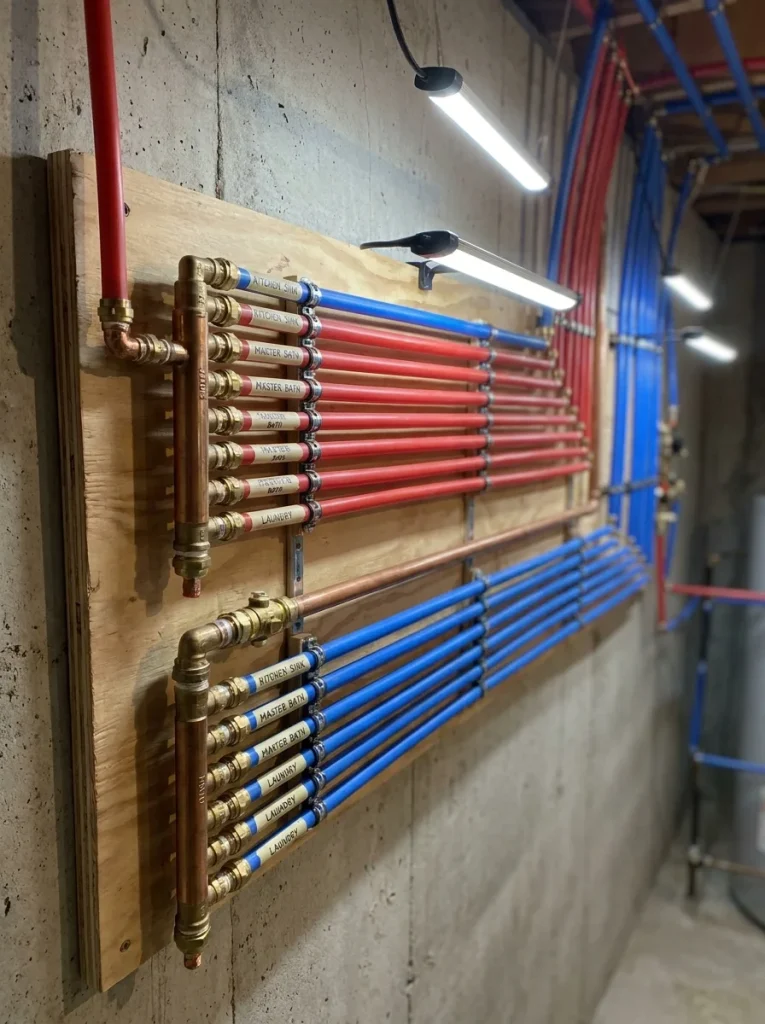
Whole-House Repiping
For homes where the pipe itself is the bottleneck: new PEX or copper supply lines, scoped honestly.