
Toilets installed level, sealed, and silent.
A toilet should be the most boring fixture you own: quiet tank, solid bowl, dry floor. We repair the ones that run, rock, or refill themselves at random, we handle straightforward swap-outs, and we install wall-hung Toto systems that seem to float. Exact written quotes before the work, a disinfected workspace after it, every single time.
Repairs that end the 2 a.m. phantom refill.
You know the sound. The house has been asleep for hours, nobody has flushed a thing, and somewhere down the hall a tank quietly tops itself back up. That phantom refill is a worn flapper letting water seep from tank to bowl until the float calls for more, and every cycle is billed water. It is among the most common problems a toilet ever develops, and among the fastest to fix well.
Nearly every running, hissing, or short-cycling toilet traces back to the same short list of parts: the flapper, the fill valve, the flush valve, and the supply line and shutoff feeding the tank. This is where our Live Video Pre-Diagnostics earn their keep. Show us the inside of the tank on a five-minute video call and the plumber arrives carrying the right parts for your exact model, which is how our first-visit fix rate stays at nearly 100 percent.
We are just as honest about when a repair stops making sense. A toilet installed before the mid-1990s likely sends 3.5 gallons down with every flush, while a modern bowl does a better job with 1.28. When an aging unit starts eating parts, we lay the repair math next to the replacement math and let you decide. And when a healthy flush still drains slowly, the porcelain may not be the problem at all. That points downstream, where our drain cleaning service takes over.
The phantom refill
A tank that tops itself off at 2 a.m. is a flapper leaking water into the bowl. Silent, invisible, and running up the bill one cycle at a time.
The endless hiss
A fill valve that never fully shuts off sends a steady thread of water down the overflow tube. You hear a hiss; the meter reads usage.
The weak, lazy flush
Mineral-crusted rim jets, a low tank level, or a flapper closing early. We find which one it is and bring back the full swirl.
Drips and tired shutoffs
Braided lines and angle stops age quietly until the day they let go. We inspect them on every toilet call and replace the ones on borrowed time.
An install is only as good as its flange.
Setting a toilet looks simple from above: bowl on, bolts tight, done. What actually decides the next decade happens at floor level. The flange, the ring that couples the porcelain to the drain and anchors it to the structure, has to sit level and at the correct height against the finished floor. New tile raises a floor, so the flange has to come up with it, with a proper extension rather than a tower of stacked wax rings pretending to be one.
Our installs follow the same quiet ritual every time: a fresh seal matched to the situation, new bolts, the bowl shimmed dead level, a new supply line on a shutoff that actually shuts, then test flushes and a dry-floor check before we call it finished. It is unglamorous work, and it is the whole difference between a toilet you forget about and one that announces every shortcut through a rocking base, a stain on the ceiling below, or the faint odor a failed seal lets through.
A straightforward replacement deserves that same care, and that is not just our opinion. One of our five-star verified BuildZoom reviews came from exactly this job: a toilet replacement in a primary bathroom, done carefully and then double-checked.
- Flange set level with the finished floor
- Fresh seal and new bolts, every time
- New supply line on a shutoff that actually shuts
- Test flushes and a dry-floor check before we leave
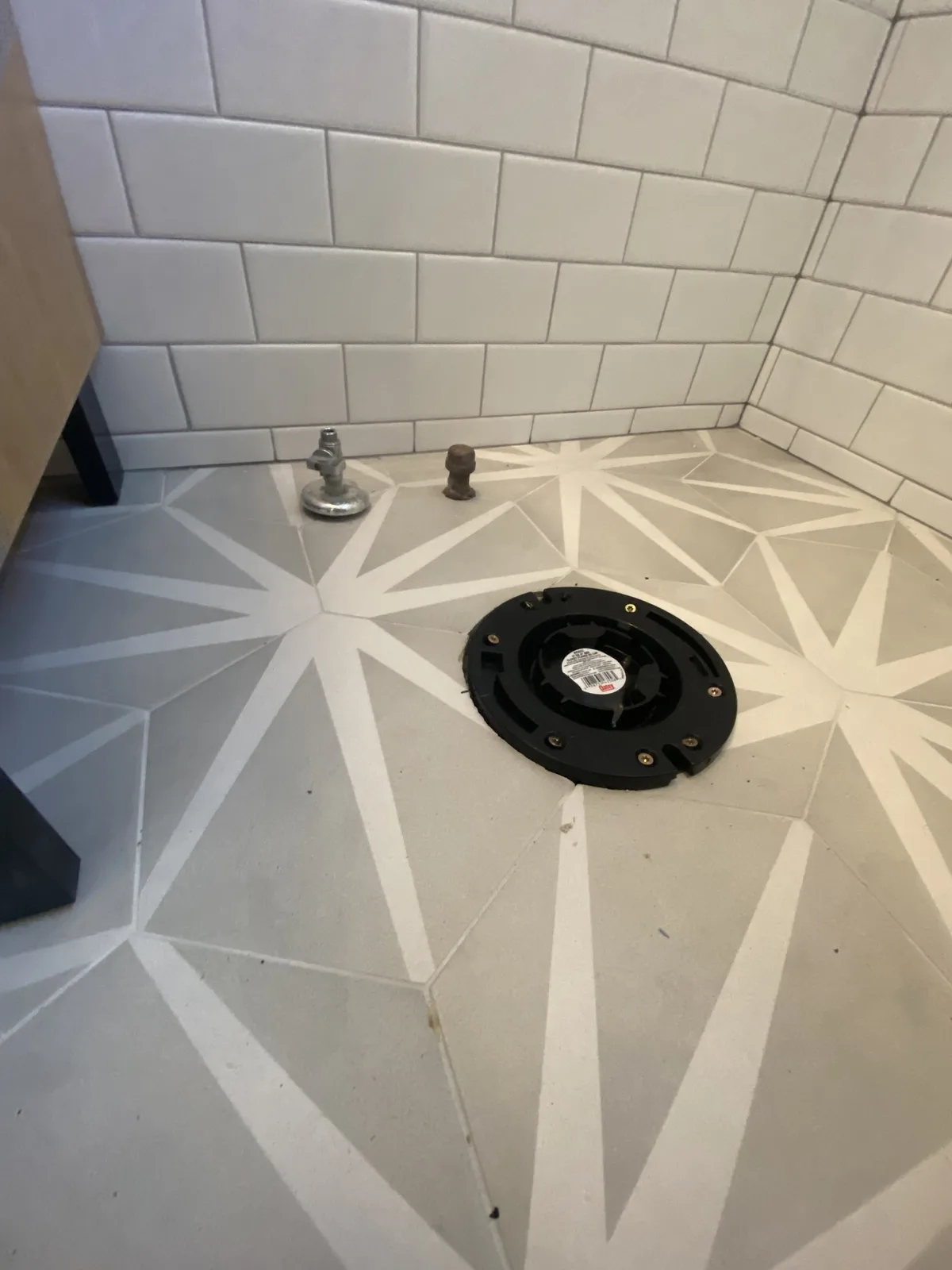
A flange rough-in on patterned tile. The part you never see decides whether it ever leaks. Click to enlarge.
Small choices that make a better bathroom.
Replacement day is the easiest moment to upgrade how a toilet works. These are the four decisions we walk every homeowner through.
Comfort height
A couple of inches taller than a standard bowl and noticeably easier on knees and backs. Our usual suggestion for primary baths and aging-in-place plans.
Skirted trapways
A smooth porcelain skirt instead of sculpted curves, so the side of the bowl wipes clean in one pass. We handle the concealed mounting they require.
Bidet-seat ready
Washlet-style seats need water and power. We tee the supply, prep the plumbing side completely, and tell you exactly what to ask your electrician for.
A flush that pays you back
Moving from an older 3.5 gallon flush to a modern 1.28 cuts the water a toilet uses by nearly two-thirds, on every flush, for decades.
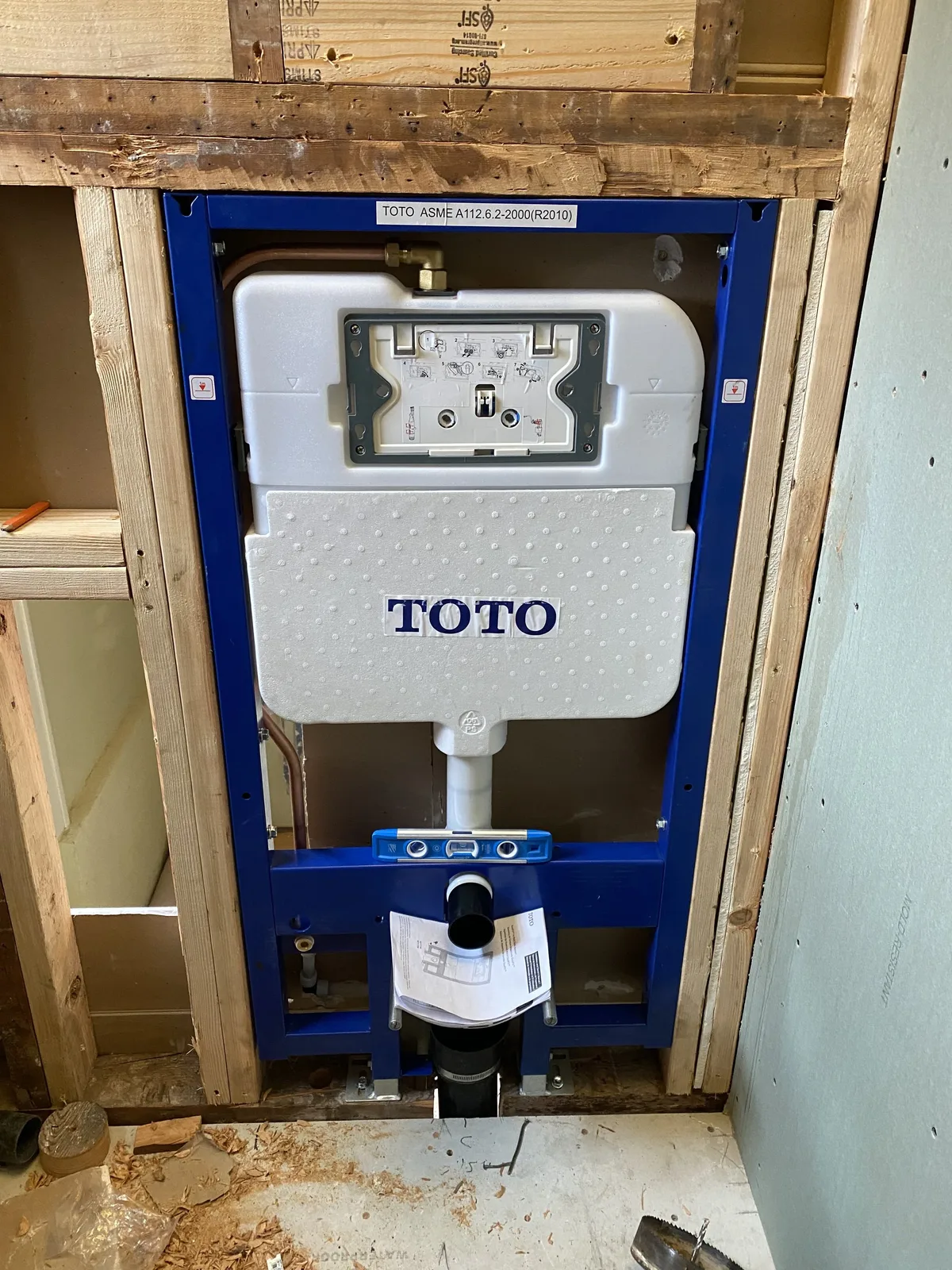
An in-wall carrier at rough-in. Everything here disappears behind the wall; only the bowl and flush plate ever show.
Wall-hung Toto systems, done by the book.
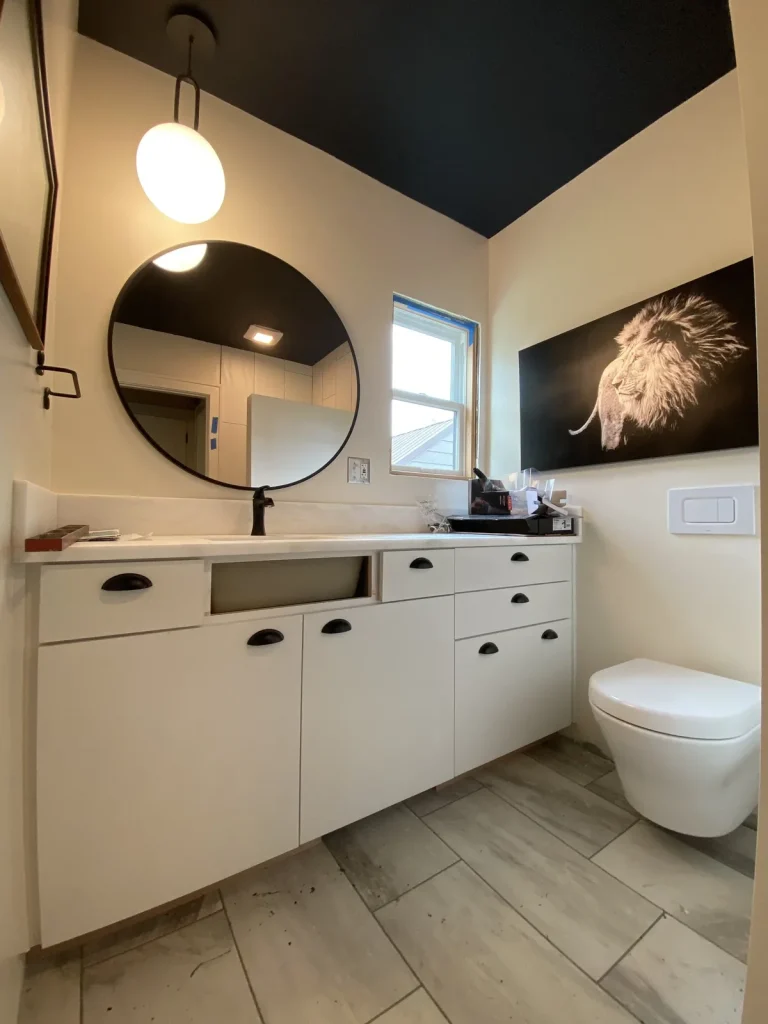
A wall-hung toilet changes how a whole bathroom reads. The bowl floats, the floor runs uninterrupted beneath it, and cleaning becomes one straight pass of the mop. In a tight powder room the space savings are real, because the tank disappears into the wall instead of standing in the room. The finished example at the top of this page shows the effect: a small space that suddenly reads like a designed one.
What makes it possible is, once again, the part you never see: a steel carrier anchored inside the wall that bears the bowl’s weight and conceals the tank and flush hardware. That carrier is the entire job. It has to be mounted plumb and solid, the drain and supply have to land exactly where the bowl expects them, and the actuator plate has to finish flush with the wall. We install Toto wall-hung systems and their in-wall carriers, and the rough-in photo here shows the stage homeowners rarely get to watch: the skeleton going in before the wall closes.
Because the carrier lives inside the wall, the easiest time to add one is while that wall is already open, which is why wall-hungs pair so naturally with bathroom remodel plumbing. Considering one for an existing bath? Book a free consultation and we will tell you honestly what your wall can hide, what it cannot, and what the project really involves.
- Real floor space back in small bathrooms
- Bowl height set to you at rough-in, not by the factory
- Concealed tank, clean lines, one-pass floor cleaning
Toilet questions, answered honestly.
Should I fix my running toilet or replace it?
What does a wall-hung toilet require?
Can you install a bidet seat?
Why does my toilet rock or leak at the base?
More questions? Browse every answer on our FAQ page.
Where toilet projects usually lead
Bathroom Remodel Plumbing
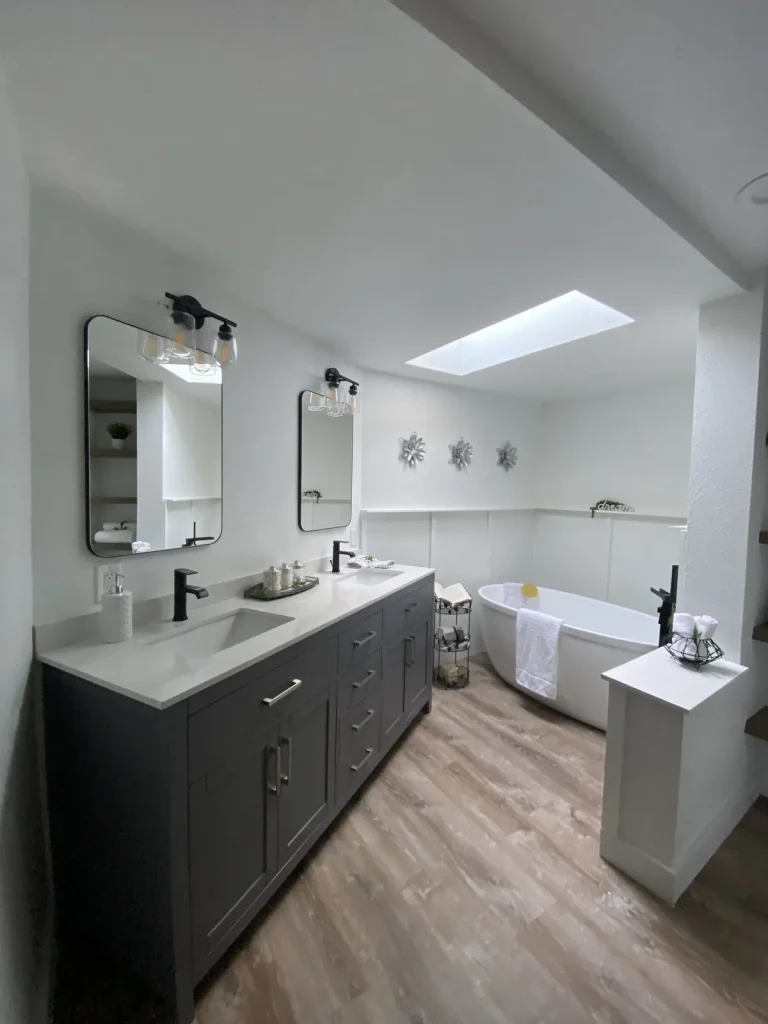
Moving fixtures, opening walls, upgrading everything at once. The natural home for a wall-hung install.
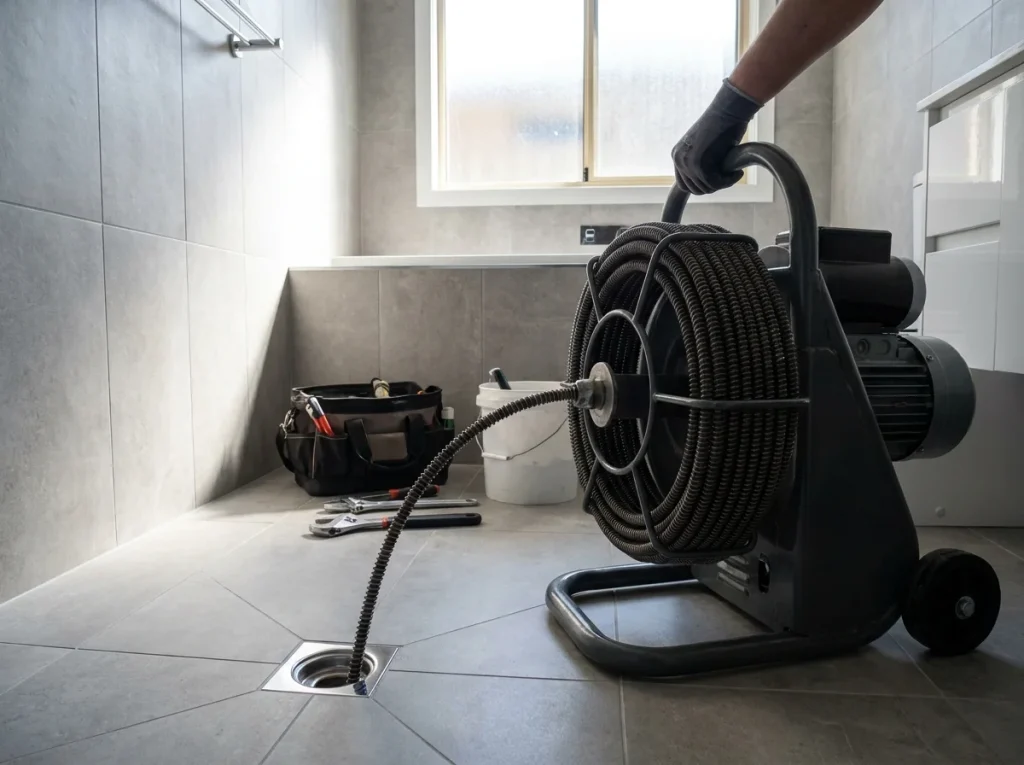
Drain Cleaning
When the toilet is healthy but the water still will not leave, the answer is downstream. We clear interior drains properly.
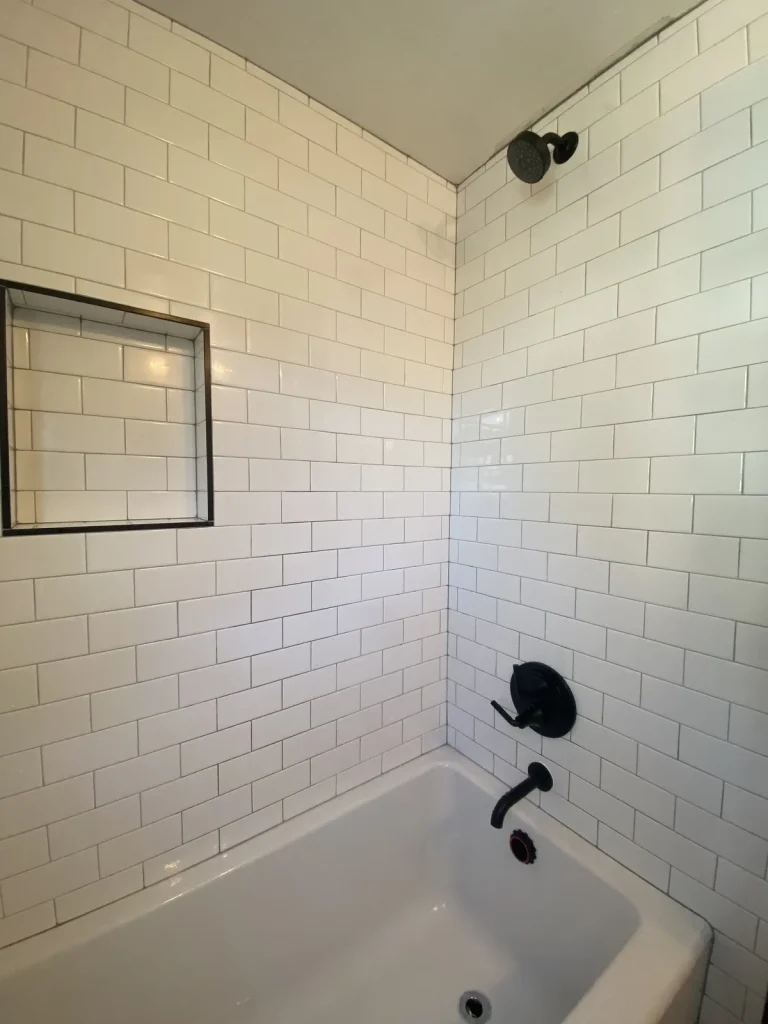
Shower Valves & Trim
Drips you cannot shut off and temperature swings when someone flushes, fixed behind the wall.
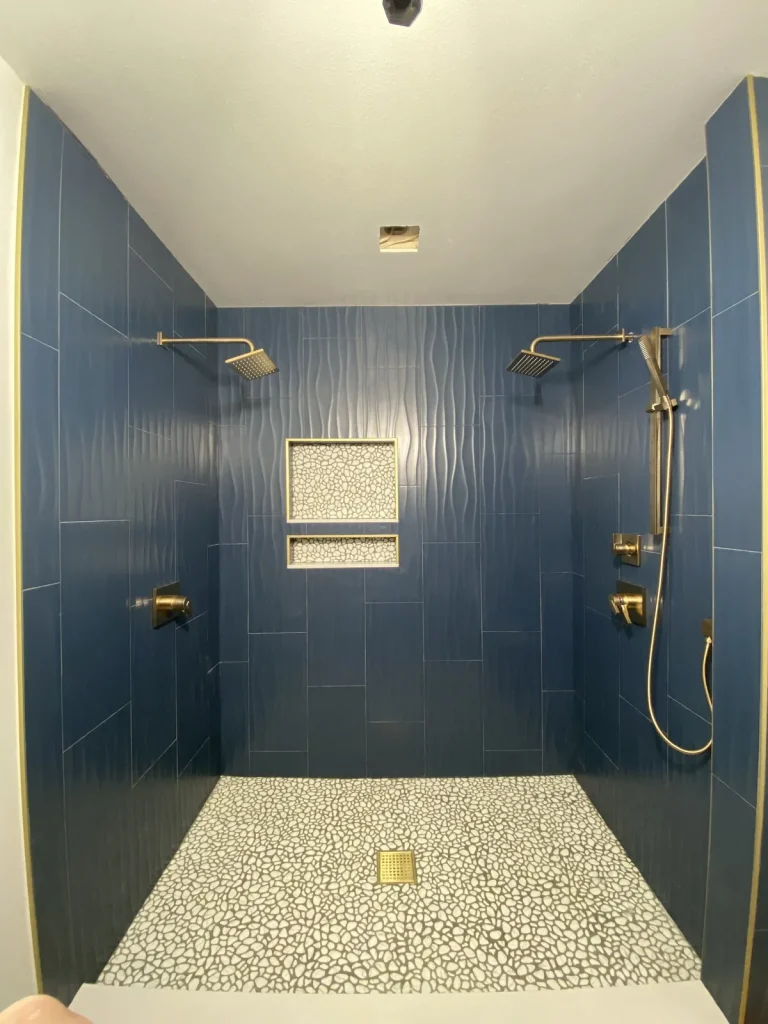
Project Gallery
Finished bathrooms and the fixtures inside them. See the standard we hold before you hire us.