
Main water line replacement, without wrecking the yard.
Every gallon your home uses travels through one buried pipe between the city meter and your foundation. When that line starts leaking, you pay for water you never see. Panda Plumbing replaces main water lines as a dedicated service with our own directional boring rig, which means a new line pulled underground while your lawn, driveway, and garden beds stay exactly where they are.
The pipe nobody thinks about until it fails.
Your water service line does its job in silence, buried a few feet down between the meter at the street and the wall of your house. In Portland and the east-metro cities we serve, the utility’s responsibility generally ends at the meter. Everything on the house side is private plumbing, which makes a failing line the homeowner’s problem to solve.
Age is usually the culprit. Many of east Portland’s mid-century homes still drink through their original galvanized steel service lines, and steel that has been underground since the Eisenhower years corrodes from both sides. The line rarely bursts all at once. It weeps, the symptoms creep in, and most homeowners live with them for months before anyone thinks to look underground.
Low pressure has more than one possible cause, and we diagnose before we prescribe. Our guide to low water pressure in Portland walks through the checking order we use, and a failing pressure reducing valve can mimic a bad line almost perfectly. When the evidence points underground, these are the signs that convict. Any one of them is worth a phone call. Two together usually means the line is already going.
Pressure that keeps falling
A slow decline over months, or a shower that dies the moment someone opens a second tap. Corrosion chokes the line from the inside long before it leaks.
A suspiciously green stripe
A soggy patch that never dries, or one lush band in a dry July lawn, tracing the path between the meter and your house.
A meter that never sleeps
Shut off every fixture in the house and watch the meter. If it keeps ticking, or you hear a faint hiss at the meter box, water is escaping somewhere along the line.
A bill with no explanation
Usage creeps up month after month while nothing about your routine changes. Leaked water is still billed water.
Directional boring, with our own rig.
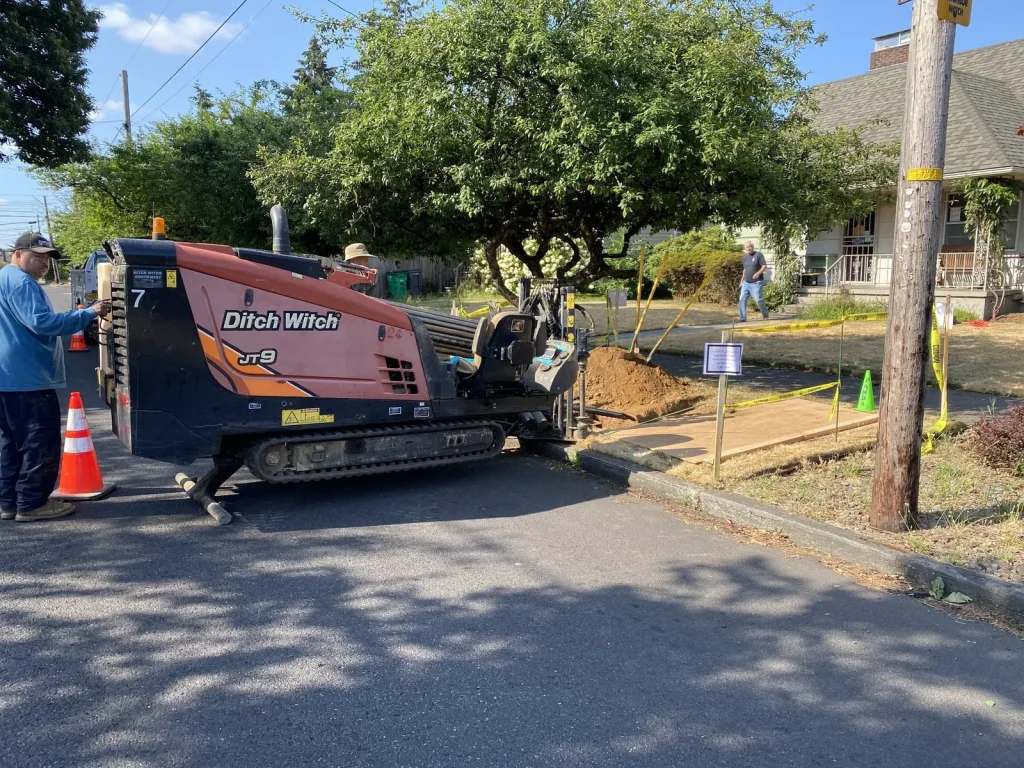
Most water lines can be replaced without opening a trench across the yard. Directional boring needs just two modest access pits, one near the meter and one where the line enters the house. The rig steers a bore path several feet below the surface, then pulls the new line back through it. The lawn above never knows anything happened.
That matters more here than most places. In east Portland neighborhoods the meter usually sits in the parking strip, which means the old line runs under the sidewalk, sometimes the driveway, and half the front yard on its way to the house. Boring passes beneath all of it. No concrete saw, no patched slab, no seam across the driveway.
Panda Plumbing runs its own directional boring rig, and the photos on this page are our machine and our crew on real jobsites. Trenchless is not something we broker out to a subcontractor. It is the default way we replace a water line, because it protects the things you cannot easily replace: an established lawn, a poured driveway, a garden that took a decade to mature.
Before a single pit is dug, underground utilities are located and marked and the bore path is planned around them. The old line does not need to come out. It is disconnected and retired in place, depressurized and harmless, so nothing above it ever gets disturbed.
- Driveways, walkways, and patios stay intact
- Mature trees keep their root systems
- Turf, beds, and irrigation left undisturbed
- Two small pits instead of one long scar
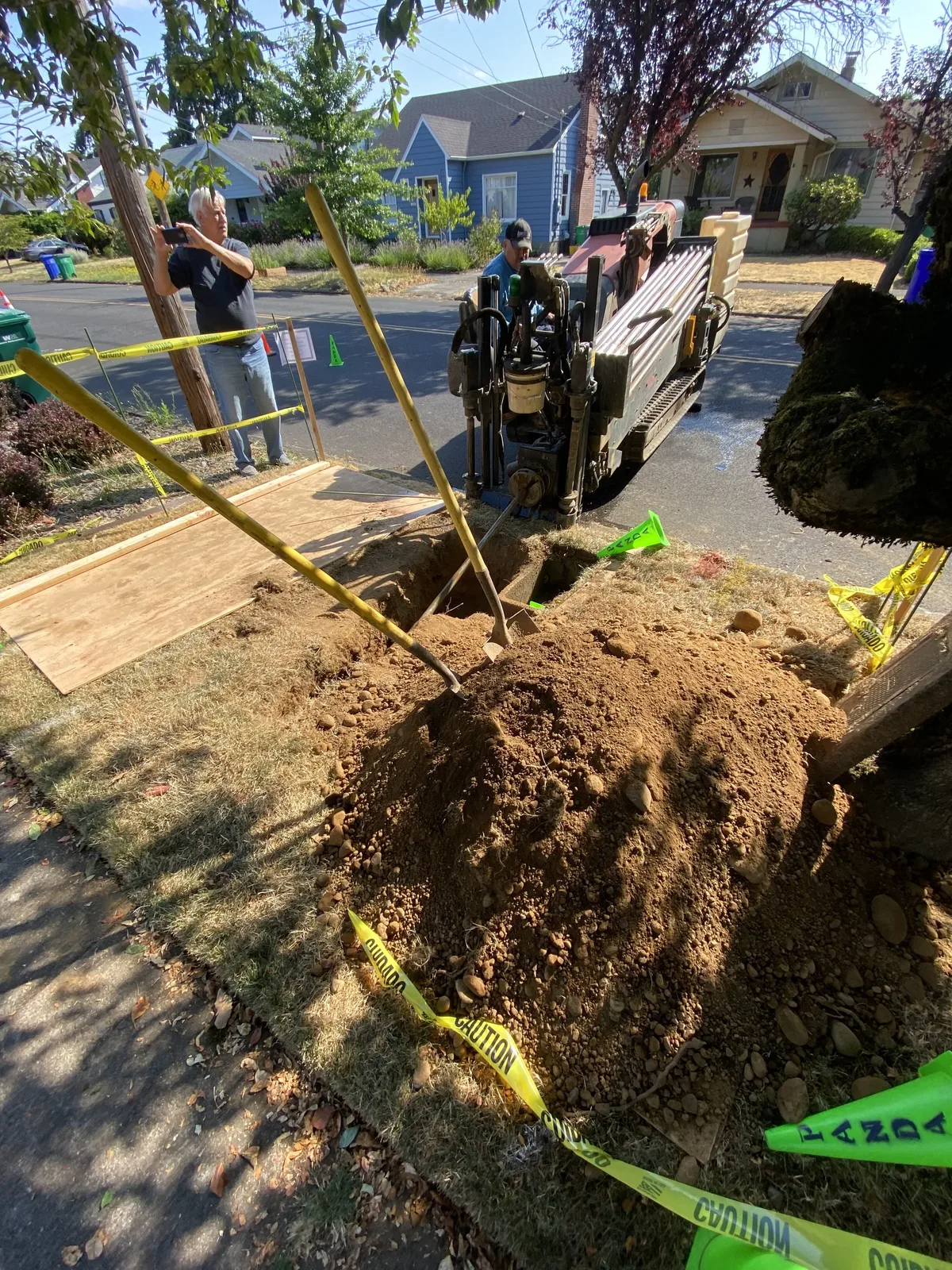
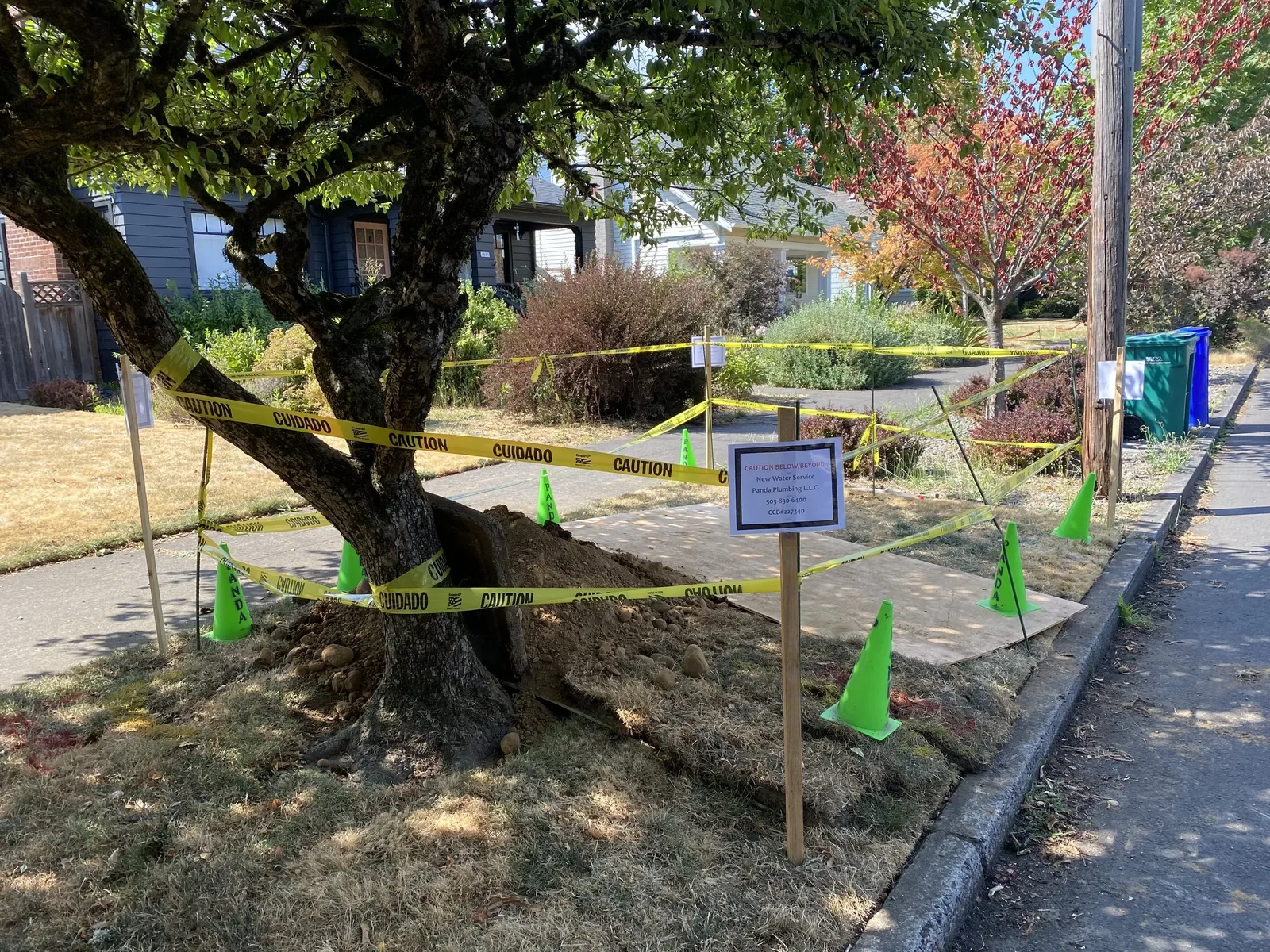
Actual Panda Plumbing jobsites: the access pit, and a mature tree the new line was routed beneath. Click to enlarge.
Open trench, only when it is the honest call.
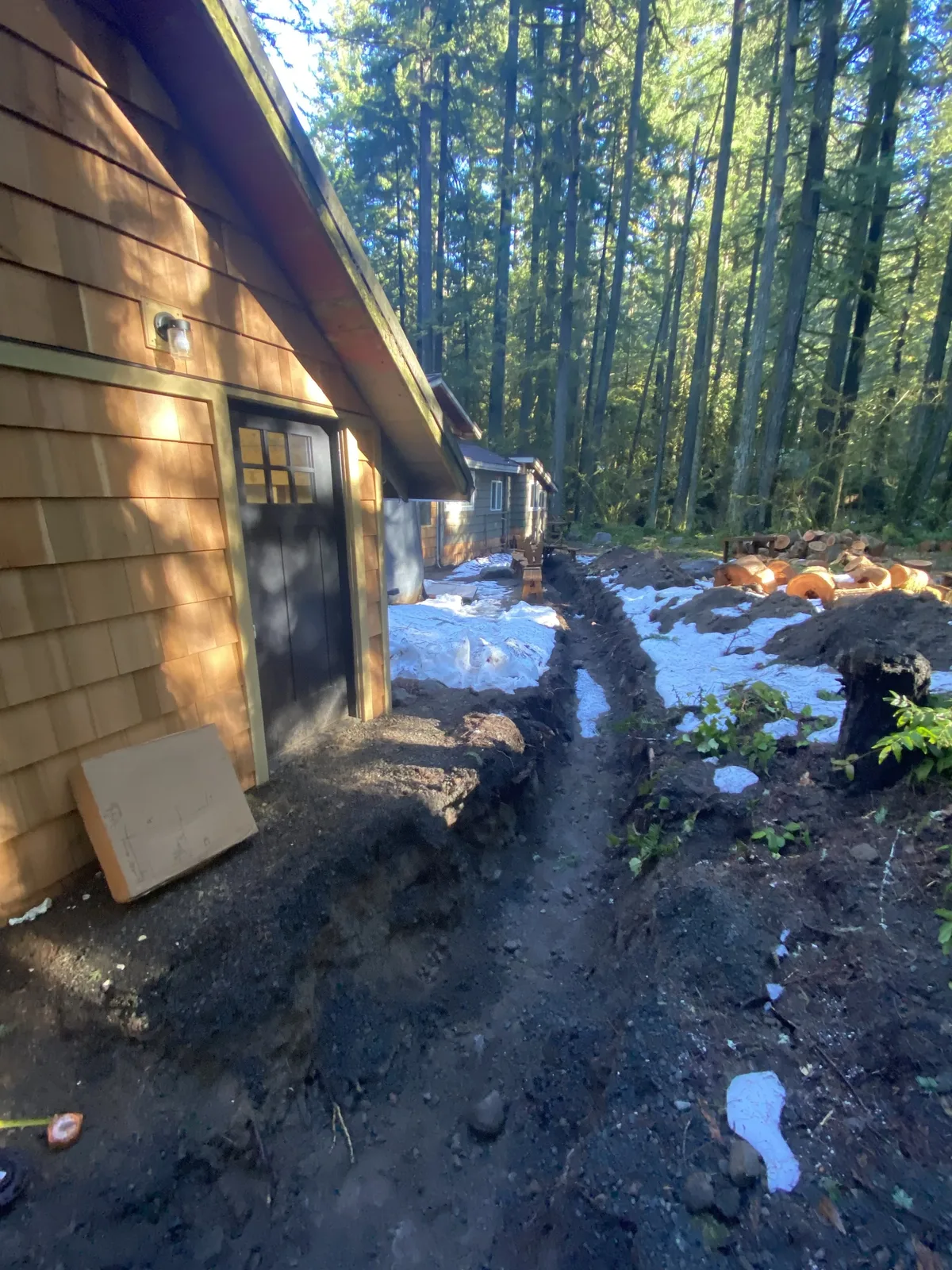
Boring is our default, not our dogma. A few jobs genuinely favor an open trench: a short, shallow run with open ground above it, soil that will not hold a clean bore, or a property where nothing above the line needs protecting. In those cases trenching is the better value, and we will tell you so before you ever see a quote.
The trenched line in this photo ran alongside a cabin on a wooded rural property, where a straight cut past the foundation was the cleanest way to lay the new pipe. Either way, the decision gets made the same way everything at Panda gets made: we walk the site, we explain the reasoning, and you get an exact price in writing before a single shovel hits the dirt.
You do not need a repipe to get a new water line.
Plenty of plumbing companies treat a failing service line as the first chapter of a whole-house repipe pitch. We do not. Main water line replacement is one of our flagship services, scoped and priced as its own project. If the plumbing inside your walls is healthy, we connect the new line to it and leave it alone. Ask us for a water line quote and a water line quote is what you get.
The two jobs solve different problems: the service line feeds the house, and the interior piping distributes it. When a home does have failing galvanized on both sides of the foundation wall, we show you what we found and let you decide whether pairing the water line with a whole-house repipe makes sense. It is one mobilization and one inspection cycle when it does, and a smaller, simpler project when it does not.
A new line is also the natural moment to add whole-house water filtration if you have been considering it: new pipe in the ground, cleaner water at every tap, one visit.
Just the line, most of the time
Most water line replacements are exactly that: a new line from the meter to the house, connected to your healthy existing plumbing, permitted and inspected as its own project.
Paired with a repipe, only when it earns it
If the piping inside the house is failing too, combining the projects can save a second mobilization. We show you the evidence and you make the call. No bundling, no pressure.
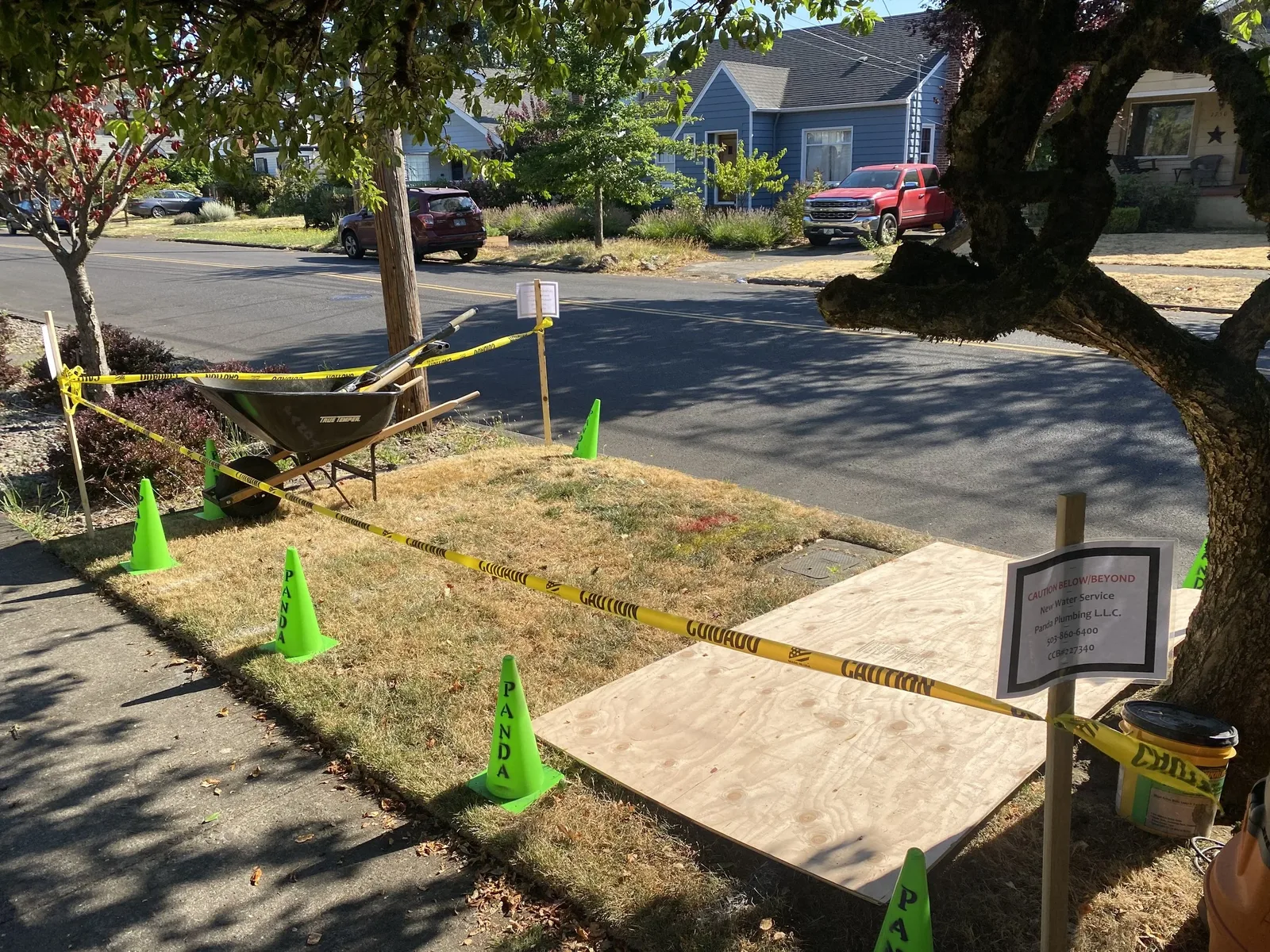
That is not a stock photo. It is our jobsite.
Look closely. Plywood laid over the grass so equipment and spoil never touch the turf. Caution tape run on staked lines around the entire work area. Green cones with our name on them. A posted sign telling the neighborhood exactly whose work this is, with our license number on it. That is a real Panda Plumbing water service replacement in Portland, photographed exactly as we set it up.
We call it Concierge Site Protection, and it covers more than appearances. Ground protection spares your lawn from equipment. Barriers keep kids, dogs, and curious neighbors away from open pits. And when the work reaches inside for the final connection, runners go down from the front door to the workspace and the area is disinfected before we leave. The yard gets the same respect as the living room.
From first call to full pressure.
The same disciplined sequence on every water service we replace.
Locate & video consult
Start with a free consultation. On a 5-minute video call, a journeyman plumber looks at your meter, your symptoms, and your site, so we arrive already knowing the likely bore path.
Exact quote, in writing
You get a guaranteed price before any work begins. Not an estimate that grows once we are in the ground, a written number we stand behind.
Bore & connect
Access pits go in, the rig pulls the new line, and we make the connections at the meter and the house. On most jobs your water is back on the same day.
Inspection & cleanup
The permit we pulled gets its final inspection, the pits are backfilled, the site is restored, and our office follows up afterward to make sure everything runs the way it should.
What homeowners ask us about water lines.
Who owns the main water line, me or the city?
How do you replace a water line without digging up my yard?
How long will my water be off?
Do I need a permit to replace a main water line?
My pressure is low. Is it the main line or something else?
More questions? Browse every answer on our FAQ page.
Services that pair with a new line
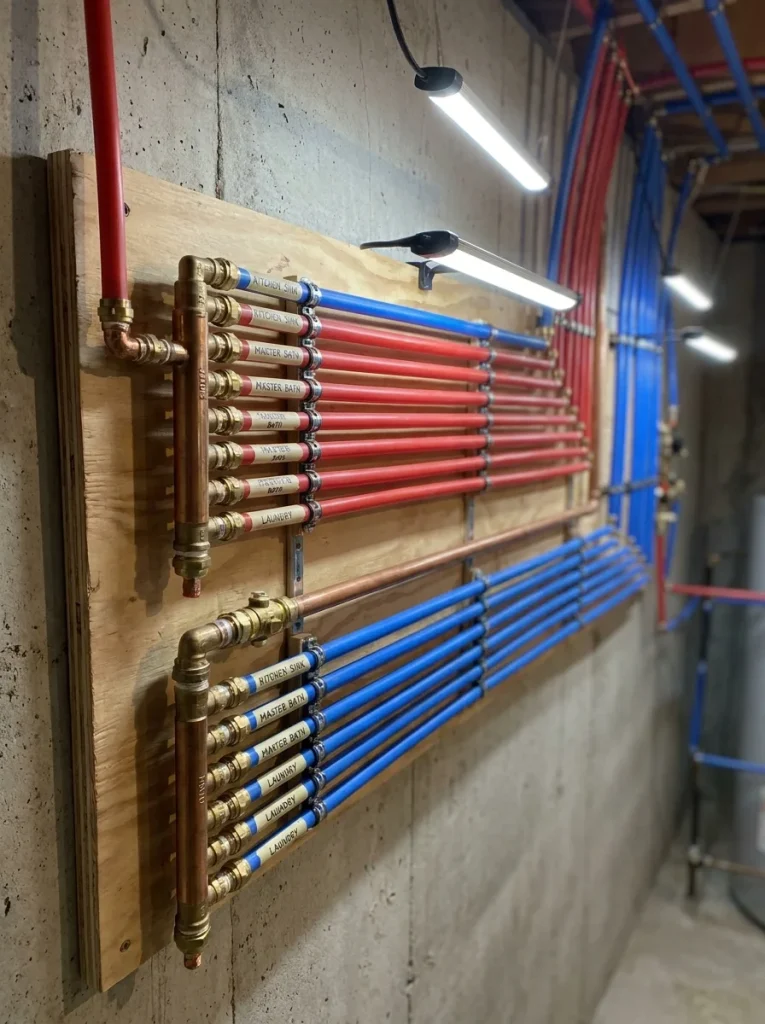
Whole-House Repiping
When the pipes inside the walls are as tired as the line outside, we replace those too. PEX or copper, labeled and legible.
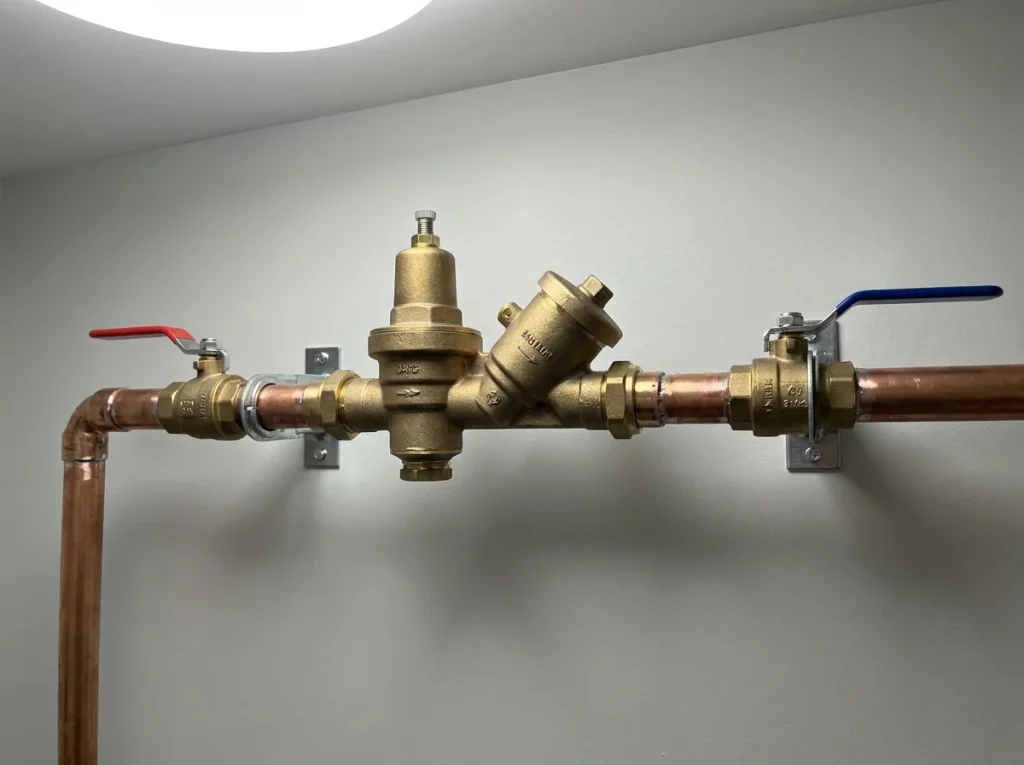
Pressure Reducing Valves
The valve that protects your fixtures from street pressure. We install, test, and replace them.
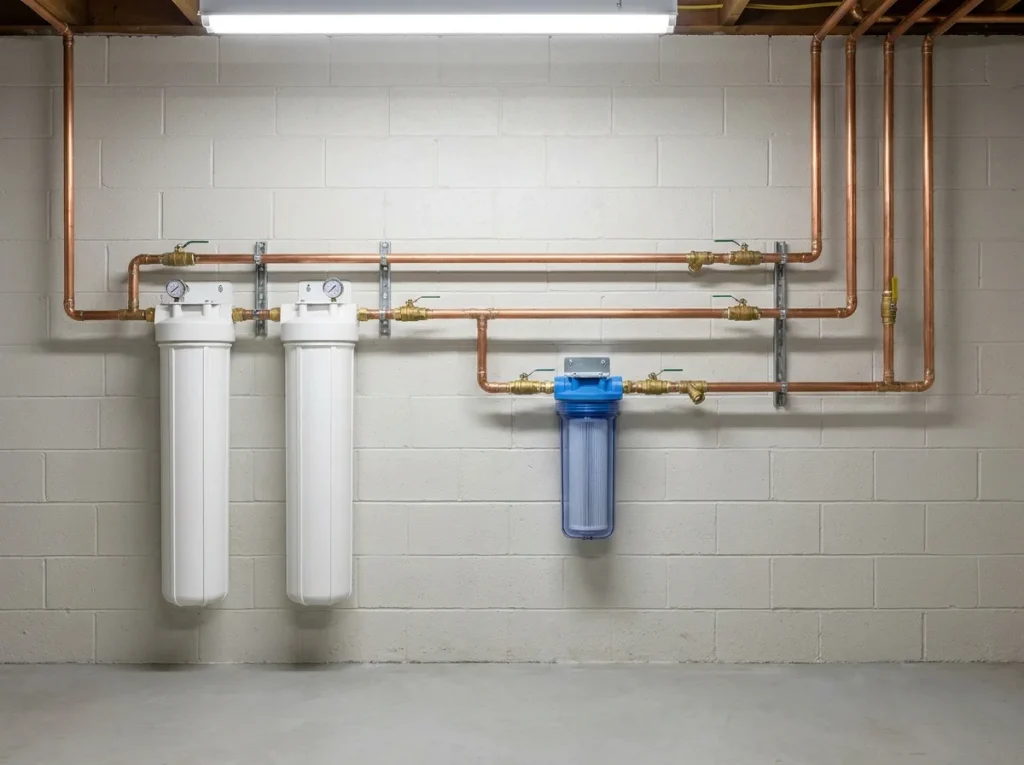
Water Filtration
Put cleaner water through your new line with a whole-house system sized for your home.
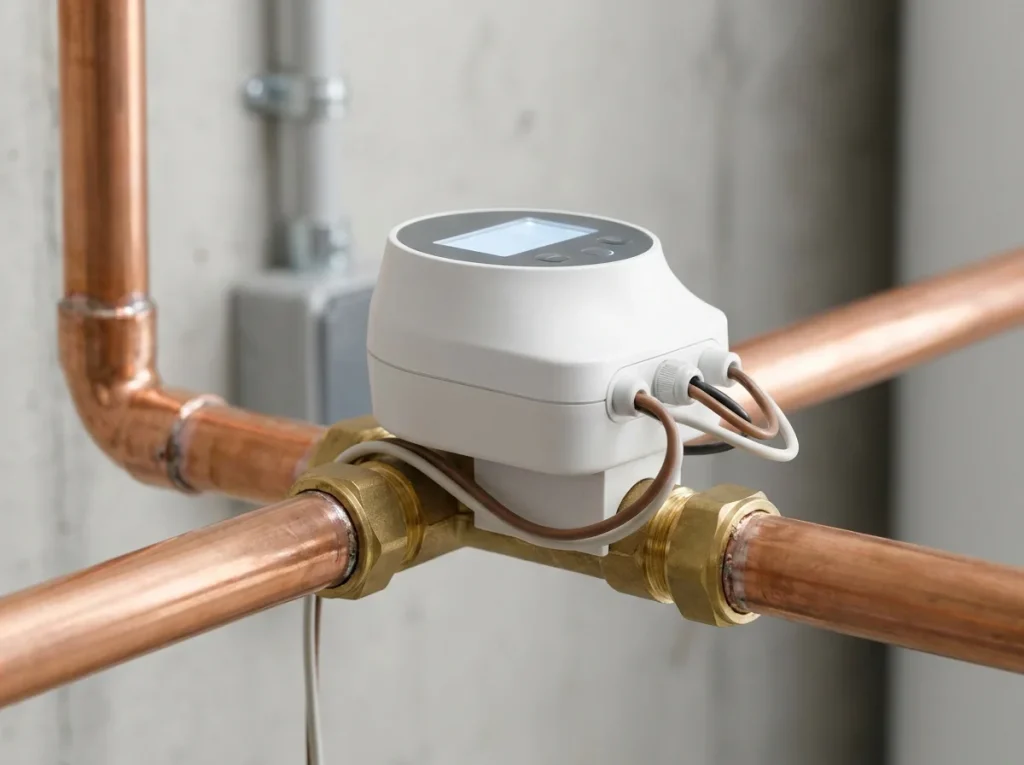
Smart Leak Shutoff
Moen Flo and Phyn watch for abnormal flow and shut the water off automatically before a leak becomes damage.