
Clackamas plumbing, from Town Center to Sunnyside.
Clackamas is the southern leg of our map: down I-205 from our NE Portland shop, off at Exit 14 where Sunnyside Road climbs toward Mt Scott. Most homes in the 97015 area date to the 1980s and 90s, and that vintage shapes everything here, from the tank in the garage to the gray pipe question. Every visit runs on an exact 30-minute arrival slot and an exact price in writing.
Down I-205, into the two-story 90s house we know by heart.
Panda Plumbing works out of NE Portland, ZIP 97230, and Clackamas is our southern run: about ten miles southeast of downtown Portland, one clean shot down I-205 to Exit 14 at Sunnyside Road. It is not so much a city as a hardworking corridor, an unincorporated stretch where OR-212, OR-213, and OR-224 all meet the freeway, with retail gathered around Town Center and neighborhoods stacking up the hillside behind it. For scheduling, that usually means 15 to 20 freeway minutes, which keeps the No-Window Guarantee comfortable: you book a precise 30-minute slot, and a missed slot waives the service call fee.
The houses tell a consistent story. The average home in the 97015 area was built in 1993, the ZIP skews heavily to the 1980s, and construction ran hot from 1970 through 1999. Walk the streets near the Town Center corridor and the pattern repeats: 1,900 to 2,200 square feet, two stories, attached garage, put up in the growth decades that followed Clackamas Town Center’s opening in 1981.
A construction window that tight matters to a plumber, because a neighborhood built inside two decades reaches plumbing middle age all at once. Original water heaters, builder-grade valves, first-generation supply lines: they age on the same schedule, and one material from those years deserves its own conversation. The rest of this page is the straight version of what we actually find inside these houses.
The 97015 area at a glance
- Average home built in 1993, with construction running heavy from 1970 through 1999
- Typical Town Center-corridor home: 1,900 to 2,200 square feet, two stories, attached garage
- I-205 Exit 14 at Sunnyside Road, where OR-212, OR-213, and OR-224 come together
- Two water providers: Clackamas River Water near Town Center, Sunrise Water Authority toward Mt Scott
- About 10 miles southeast of downtown Portland, a straight freeway run from our shop
- A 30-minute arrival slot promised on every booking, never a half-day window
The one material from the 90s worth checking for.
Polybutylene was the gray plastic supply pipe of choice in subdivisions from the late 1970s to the mid 1990s: inexpensive, flexible, quick to install. Its reputation did not survive contact with reality. The pipe and its fittings can degrade from the inside and fail without the warning drip that copper usually gives you. An area whose average home dates to 1993 sits dead-center in that manufacturing window, and entire subdivision phases along the Sunnyside corridor went up while it was still going into walls.
That history follows the pipe around. Insurance carriers ask about supply-line material when writing and renewing policies, and gray pipe in the crawlspace can turn a routine renewal into a negotiation. The poly question also tends to surface at the worst possible moments: mid-escrow, mid-claim, or mid-flood, when nobody has time for a research project.
So here is our position, on the record: not every 90s house has polybutylene. Plenty of homes from those years were plumbed in copper straight through the era, and later phases often used early PEX. Nobody should be sold a repipe over the phone, and we will not do it. We identify what is actually in your walls and tell you straight. Healthy copper or PEX gets left alone, and we say so. Confirmed poly gets a clear explanation of what a whole-house repipe involves and an exact, guaranteed price in writing before any work is scheduled.
Spotting it yourself
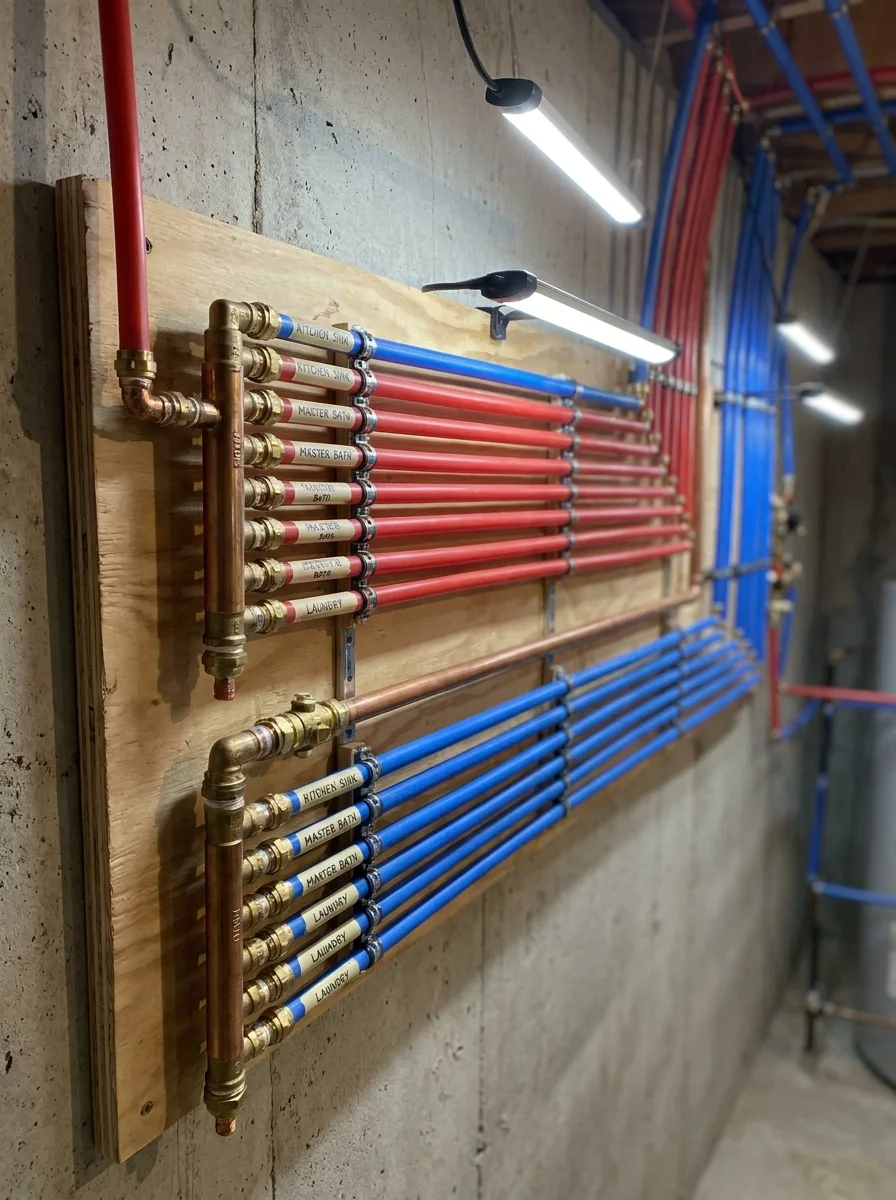
Check where pipe is exposed: the lines feeding your water heater, supply stubs under sinks, the run at the main shutoff. Poly is gray, slightly bendable plastic, and unmistakable once you know it.
Why insurers flinch
Poly failures tend to be sudden and wet rather than slow and drippy. Decades of claims taught carriers to ask about the material by name, sometimes as a condition of coverage.
Our inspection-first rule
Identification costs you a few minutes and zero pressure. You hear what the material is, what shape it is in, and what, if anything, is worth doing about it, priced in writing.
Settle it from your couch
Book the five-minute video call and point your phone at the pipes above your water heater. A journeyman plumber can usually name the material on sight, which means you get a real answer before a truck is ever dispatched, and the visit that follows starts with a plan instead of a hunt.
Two more clocks ticking in an 80s or 90s house.
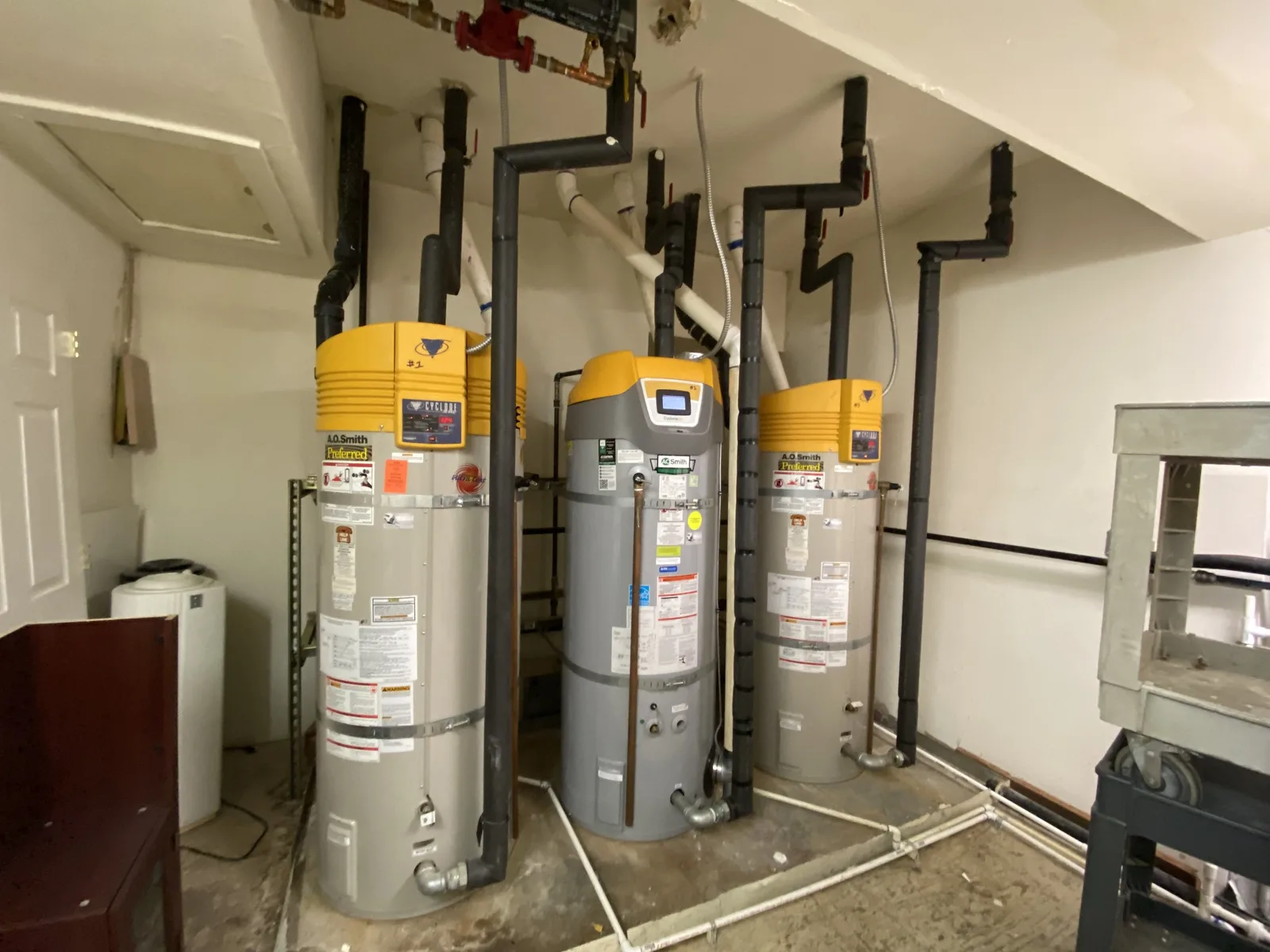
Water reaches the 97015 area from two directions: Clackamas River Water supplies the Town Center and 82nd Drive corridor, while Sunrise Water Authority covers the Mt Scott and Sunnyside side. What both halves share is the age of everything that water flows through. The oldest pockets here still run tanks 30 or even 40 years old, far beyond the 10-to-12-year design life, and a water heater replacement planned on your calendar always beats the version forced on you by a cold shower and a soaked garage floor.
The era’s copper needs watching too. Pipe from the 1980s around here is developing pinhole leaks: pinpoint corrosion that weeps into walls, stains the ceilings below bathrooms, and announces itself as a musty smell or a quietly climbing bill long before you ever see water. High pressure accelerates the wear, which is why a pressure reducing valve check belongs on any older copper system. Caught early, a pinhole is a small repair. Ignored, it becomes a drywall project with a plumbing bill attached.
Date the tank
The serial plate tells the truth. A tank installed when Town Center was new has outlived its design life two or three times over.
Look for green and blue
Crusty green or blue deposits at copper joints are corrosion leaving a calling card, and the usual birthplace of pinholes.
Watch the bill
A slow, unexplained climb in water usage usually means water going somewhere it should not, and in a 90s two-story that somewhere is often inside a wall.
Test the pressure
A gauge on a hose bib takes five minutes. Static pressure north of 80 psi punishes old copper, and a pressure reducing valve corrects it for good.
Multi-bath two-stories, right at remodel age.
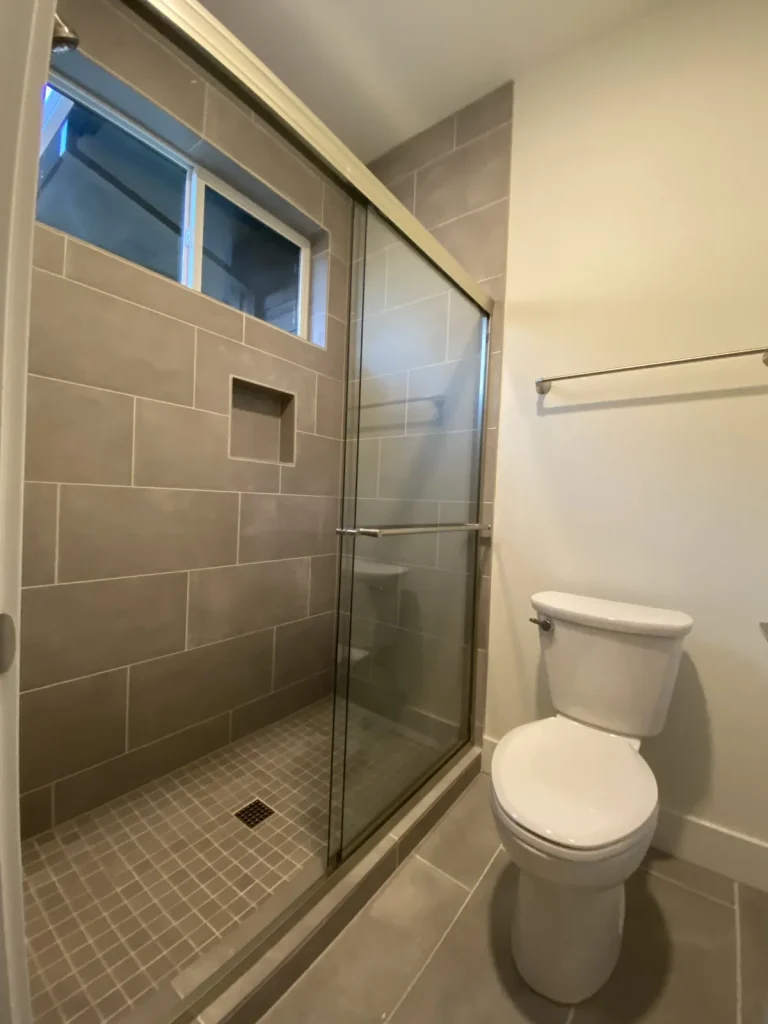
The signature local floor plan came with bathrooms in the plural, and those bathrooms are now past thirty. Builder fiberglass surrounds, tired valves, a tub nobody has filled in years: this is exactly the housing that turns into the walk-in showers and freestanding tubs in our project gallery. Our bathroom remodel plumbing team handles the part that decides how the room works for the next few decades: moving supply and drain lines, setting the valve, and getting the slope and waterproofing details right before the pretty finishes go on.
A remodel is also the cheapest moment to deal with whatever the walls have been hiding. With tile off and studs open, replacing a poly run or tired copper costs a fraction of doing it later as its own project. We flag what we see, price it in writing, and let you decide while the walls are already open.
Where we run in the 97015 area
From the Town Center and 82nd Drive corridor to the Sunnyside streets climbing toward Mt Scott, plus the neighborhoods around Kaiser Sunnyside Medical Center, Camp Withycombe, and the Harmony campus by the North Clackamas Aquatic Park. If you call this part of the map home, you are inside our service area.
Clackamas questions, answered straight.
How do I know if my Clackamas house has polybutylene?
Are pinhole leaks in 1980s copper really a big deal?
Do you charge extra to come out to Clackamas?
Which parts of the Clackamas area do you cover?
More questions? Browse every answer on our FAQ page.